


Refine your search for walks in Église San-Quilico (Piève)
Église San-Quilico (Piève) walks


 Rapale and Pieve circular loop
 Association / Club / Walk leader
 4.06 mi
 +1,010 ft
 -988 ft
 2h 45
 Moderate
 Departure from Rapale (Haute-Corse)
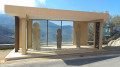
Created on the initiative of the municipalities of Rapale, Pieve and Sorio, the ‘Between the Profane and the Sacred’ route passes through these three beautiful villages of the Upper Nebbiu, which have showcased and preserved a heritage that is an absolute must-see. Communal footpaths, mule tracks, Romanesque chapels, menhir statues, a church with an off-centre bell tower, plus a route through chestnut and oak woods, making it suitable for walking in all seasons.
This description is not a copy-and-paste of the certified route but a variant split into two circular loops that follow its route. The idea is to make the route more accessible by reducing the distance and duration, thus allowing more time to explore the heritage. This is therefore the first circular loop.
Circular route between Piève and Sorio
 3.57 mi
+1,201 ft
-1,217 ft
2h 40
Moderate
Departure from Piève (Haute-Corse)
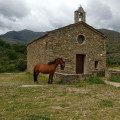
Second circular route of the route: ‘Between the Profane and the Sacred’, created on the initiative of the municipalities of Rapale, Pieve and Sorio, using the old footpaths that once linked the three villages. This route is every bit as good as the previous one when it comes to exploring the local heritage: menhir statues, wash houses, fountains, cobbled alleyways and communal paths lined with walls – that’s the secular side. The sacred heritage, meanwhile, is remarkable, featuring the churches of San Quilico in Pieve and San Filippu Neri in Sorio, as well as the chapels. The return journey from Sorio to Pieve, perched high above the Nebbiu plain and the Gulf of Saint Florent, offers excellent opportunities for photographs.
Walks near Église San-Quilico (Piève)
From Saint Florent to Saleccia via the coastal path
 Visorando Member11.03 mi
+423 ft
-413 ft
5h 25
Moderate
Departure from Saint-Florent (Haute-Corse)
This coastal hike allows you to explore this desert via a very pleasant trail and swim in idyllic coves.
Chjassu Napuleone in Barbaggio
 Local authority
 1.86 mi
+79 ft
-761 ft
0h 55
 Easy
Departure from Barbaggio (Haute-Corse)
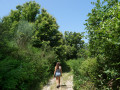
Starting from Barbaggio town hall (heading downhill), the Chjassu Napuleone crosses the village before entering a forest, where you can see old agricultural gardens on either side of the path. The richness of this route continues when you take the "imperial road" that gave the trail its name. Before becoming emperor, Napoleon Bonaparte is said to have walked this road.
The trail can also be taken in the opposite direction (uphill), starting from the bridge at the intersection of Strada San Petru and Strada Napuleone. If you are only doing a one-way trip, i.e. not returning, remember to leave one car at the starting point and another at the end.