


Refine your search for walks in Église Saint-Médard (Brunoy)
Église Saint-Médard (Brunoy) walks


 Mills and Menhirs along the river Yerres
 Visorando Member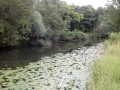
 6.46 mi
 +161 ft
 -171 ft
 3h 05
3h 05
 Moderate
 Departure from Brunoy (Essonne)
This hike mostly takes place along the Yerres, a tributary of the Seine, and also includes a section in the Forest of Senart and an urban section. There you can enjoy the charm of this river and the beautiful houses around it, admire two ancient watermills and come cross no fewer than four standing stones along the way.
New Year's Eve at the abbey
 6.91 mi
+197 ft
-194 ft
3h 20
Moderate
Departure from Brunoy (Essonne)
6.91 mi
+197 ft
-194 ft
3h 20
Moderate
Departure from Brunoy (Essonne)
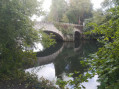
Circular route around the former Yerres Abbey (12th century) located at the confluence of the Yerres and Réveillon rivers. The start of the route follows the course of the Yerres to the abbey, then climbs through a highly urbanised area to the former Camaldolese monastery, before descending towards the Réveillon, which you follow to the confluence. The return journey takes you through Brunoy, past the Robert Dubois-Corneau Museum, Saint-Médard Church and finally the Perronet Bridge.
Slices of Brie from station to station
 250.69 mi
+8,688 ft
-8,586 ft
30 days
Moderate
Departure from Coulommiers (Seine-et-Marne)
250.69 mi
+8,688 ft
-8,586 ft
30 days
Moderate
Departure from Coulommiers (Seine-et-Marne)
From the medieval town of Coulommiers to Provins, via a loop around the Marne in the Paris suburbs, a series of walks starting from a station and crossing the Brie plain, its villages and its rich heritage.
Walks near Église Saint-Médard (Brunoy)
Along the Yerres and Réveillon rivers and through the Bois de la Grange
7.13 mi
+230 ft
-210 ft
3h 30
Moderate
Departure from Brunoy (Essonne)
A pleasant walk along two rivers, the Yerres and the Réveillon. You completely forget the nearby urban environment.
From Brunoy to Combs-la-Ville
 8.11 mi
+348 ft
-279 ft
4h 00
Moderate
Departure from Brunoy (Essonne)
8.11 mi
+348 ft
-279 ft
4h 00
Moderate
Departure from Brunoy (Essonne)
A hike from station to station in a semi-urban environment, following paths through gardens and pleasant riverside trails.
From Quincy to Montgeron along the Yerres
11.29 mi
+171 ft
-302 ft
5h 20
Moderate
Departure from Combs-la-Ville (Seine-et-Marne)
This is an unusual route, as the outward journey is by train from Montgeron station to Combs la Ville-Quincy-sous-Sénart station, and the return journey is on foot along a path that largely follows the banks of the Yerres.
Arc Boisé in eastern Paris
 15.21 mi
+161 ft
-220 ft
7h 10
15.21 mi
+161 ft
-220 ft
7h 10
 Difficult
Departure from Boissy-Saint-Léger (Val-de-Marne)
Difficult
Departure from Boissy-Saint-Léger (Val-de-Marne)
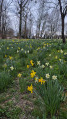
This long hike goes from one RER A station to another. It begins with a climb in Boissy Saint-Léger but the rest is flat. We start with a circular walk through the Gros-Bois Forest, then the main part of the walk takes us through the Notre-Dame Forest. We alternate between wide avenues and footpaths, with a wide variety of trees. The walk ends with a long, gently sloping green corridor and a walk through Morbras Park. Several alternative routes allow you to shorten the route.
From Boissy to Brunoy via the Grange forest and the banks of the Yerres
 8.10 mi
+243 ft
-249 ft
3h 55
Moderate
Departure from Boissy-Saint-Léger (Val-de-Marne)
8.10 mi
+243 ft
-249 ft
3h 55
Moderate
Departure from Boissy-Saint-Léger (Val-de-Marne)
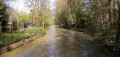
The first part of this hike from station to station is mainly through forest, with a mix of wide paths and winding trails. Then you follow the course of the Yerres, playing leapfrog with the river, its branches and tributaries.
Bonneuil-sur-Marne through the eyes of graffiti artists
 Local authority
 1.51 mi
+33 ft
-7 ft
0h 45
1.51 mi
+33 ft
-7 ft
0h 45
 Easy
Departure from Bonneuil-sur-Marne (Val-de-Marne)
Easy
Departure from Bonneuil-sur-Marne (Val-de-Marne)
Discover or rediscover the Grand Paris Sud-Est Avenir area by exploring its various walking routes, which showcase the main points of interest and the sometimes little-known treasures of our 16 municipalities, each with their own unique and distinctive histories.
From Sucy-en-Brie to Boissy through the forests of Notre-Dame and Grosbois
 8.09 mi
+266 ft
-184 ft
3h 55
Moderate
Departure from Sucy-en-Brie (Val-de-Marne)
8.09 mi
+266 ft
-184 ft
3h 55
Moderate
Departure from Sucy-en-Brie (Val-de-Marne)
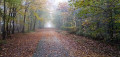
A hike from station to station, half urban, notably through the paths and alleys of Sucy-en-Brie, and half forest.
From Créteil to Maisons-Alfort via the lake and the Juliottes neighbourhood
 4.56 mi
+46 ft
-16 ft
2h 10
Easy
Departure from Créteil (Val-de-Marne)
4.56 mi
+46 ft
-16 ft
2h 10
Easy
Departure from Créteil (Val-de-Marne)
An urban route starting along Lake Créteil from its southern tip to its northern tip, set amongst lawns and reed beds. You then cross, via footpaths, the ‘Du Chou et des Épis’ neighbourhood, with its cylindrical tower blocks featuring original designs, and the University district. The end of the route takes you to Maisons-Alfort via the Juliottes neighbourhood.
From Juvisy to Choisy-le-Roi via Lac Montalbot
 8.58 mi
+16 ft
-20 ft
4h 00
Moderate
Departure from Juvisy-sur-Orge (Essonne)
8.58 mi
+16 ft
-20 ft
4h 00
Moderate
Departure from Juvisy-sur-Orge (Essonne)
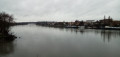
A walk that starts in the Port aux Cerises park, with its ponds and Neolithic menhir. You then walk alongside a large lake and cross an urbanised area. The final third of the walk takes place mainly on the towpath along the Seine.
Following the Essonne
 97.78 mi
+3,153 ft
-3,136 ft
10 days
Moderate
Departure from Corbeil-Essonnes (Essonne)
97.78 mi
+3,153 ft
-3,136 ft
10 days
Moderate
Departure from Corbeil-Essonnes (Essonne)
Named after Acionna, the Gallo-Roman goddess of rivers, the Essonne flows through the north of the Loiret department and the south of the Île-de-France region. The first five stages follow its course downstream, while the last four follow it upstream. These nine stages are accessible by train. One stage, which is not accessible by train, forms a circular route upstream. The route alternates between paths along the river, passages through woods and those across cultivated plateaus.