


Refine your search for walks in Église Saint-Laurent (Beire-le-Chatel)
Église Saint-Laurent (Beire-le-Chatel) walks


 From Beire-le-Châtel to Spoy and back
 Visorando Member
 5.56 mi
 +72 ft
 -79 ft
 2h 35
2h 35
 Easy
Easy
 Departure from Beire-le-Châtel (Côte-d'Or)
Beire-le-Châtel: canton of Saint-Apollinaire (formerly canton of Mirebeau).
The village takes its name from the Gaulish word "Beire", meaning "plain". The discovery of a temple dedicated to Januaria recalls the position of Beire-le-Châtel in Gallo-Roman times, at the crossroads of ancient roads where the remains of two Roman roads can be found. In addition, six Gallo-Roman burials were found in 2019.
Walks near Église Saint-Laurent (Beire-le-Chatel)
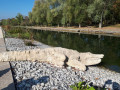
From the Hauts du Suzon to the crocodiles of the Ouche
 10.45 mi
+413 ft
-554 ft
5h 10
10.45 mi
+413 ft
-554 ft
5h 10
 Moderate
Departure from Dijon (Côte-d'Or)
Moderate
Departure from Dijon (Côte-d'Or)
The Suzon and the Ouche, two rivers of great importance to Dijon. This route runs from one to the other through a patchwork of gardens, avenues and small paths. Historical and artistic points of interest and viewpoints.
Access by tram; access by car is also possible.
Les Balcons du Suzon, part 1
 4.01 mi
+653 ft
-584 ft
2h 25
Easy
Departure from Messigny-et-Vantoux (Côte-d'Or)
4.01 mi
+653 ft
-584 ft
2h 25
Easy
Departure from Messigny-et-Vantoux (Côte-d'Or)
A route well-known to local hikers, signposted by the CAF.
The route given here (1h45/2h) from Messigny-et-Vantoux to Sainte-Foy was completed by a man in his sixties, walking on the uphill sections and trail running on the flat and downhill sections...
This route forms part of a longer hike (Tour du Val Suzon).
Dijon, from the Valois to Art Nouveau
 Association / Club / Walk leader
 4.92 mi
+30 ft
-20 ft
2h 15
Easy
Departure from Dijon (Côte-d'Or)
4.92 mi
+30 ft
-20 ft
2h 15
Easy
Departure from Dijon (Côte-d'Or)
Dijon is a remarkable city, shaped by its history. Since its Gallo-Roman origins (3rd century), three major periods have shaped this city: the Middle Ages, with its churches; then the Valois, Grand Dukes of Burgundy; and the Renaissance, reflected in the splendour of the parliamentarians’ mansions; and Art Nouveau, with its inventive decorations. The aim of this discovery walk is to take you through these different periods.