Circular Pic de la Soucarrane route via the Gardelle and Soucarrane lakes

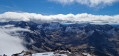
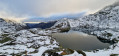
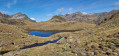
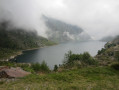
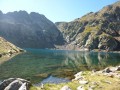
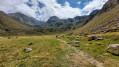
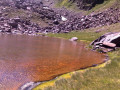
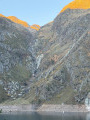
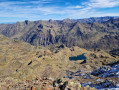
Set in the vast glacial cirque of Soulcem, this walk takes you past several high-altitude lakes with crystal-clear waters and sumptuous rocky landscapes that make you forget the considerable effort required, both on the ascent and the descent. On the way back, a few Mérens horses and the magnificent Orris du Carla sheep provide a pleasant end to the walk.
A minimum level of physical fitness is required for this mountain hike.

Details

37003932
Creation:
Last update:
Last review:
  • Walking
    Activity: Walking
  • ↔
    Distance: 9.40 mi
  • ◔
    Duration according to the author: 10 hrs 
  • ▲
    Difficulty: Very difficult

  • ⚐
    Back to start: Yes
  • ↗
    Ascent: + 5,367 ft
  • ↘
    Descent: - 5,344 ft

  • ▲
    Highest point: 9,469 ft
  • ▼
    Lowest point: 5,308 ft

Photos

Description of the walk

Starting from L’Orris du Carla-Vicdessos, park in the car park at the end of the tarmac road (D8) leading to Étang de Soulcem.

(S/E) Walk back down the road for about 150 m to a footbridge spanning the Ruisseau de Soulcem

Yellow PR® signposting

(1) As you cross the footbridge, ignore a path on your right and begin the long, arduous climb towards the Étangs de la Gardelle. The clearly marked path crosses several steep rocky sections. The slope is extremely steep, and you’ll need to take breaks to catch your breath and rest your legs. After one final steep climb, you’ll reach a flat area marked by a large boulder bearing a double yellow arrow, pointing left and right.

(2) Enjoy the view of the first lake, then take the fork to the left and head north-east to quickly reach a viewpoint overlooking the fourth lake, which you will be looking down on from a height of about thirty metres.

(3) From this point, take great care as the yellow markings are almost non-existent. Head south-east to move away from the pond (the IGN route, which runs closer to the pond, is incorrect). Follow the numerous cairns to climb up a small valley and, further up, rejoin a well-defined path that will quickly lead you to a pass (elevation 2476).

(4) Descend on the other side, crossing over to the opposite slope. After negotiating a short rocky section by scrambling down (without any real difficulty), continue the very steep descent, alternating between grassy sections and scree slopes. When the slope levels off, the path crosses a small stream and joins a junction with another well-defined path coming from the left (alt. 1810 m).

(5) Turn right towards the Étang de Roumazet and reach another path junction (elevation 2158).

(6) 50 m before reaching the lake, take a small path marked in yellow on your right (heading west). This path crosses a grassy area, then climbs up a gully to the left of the stream. Once you reach a flat area at an altitude of 2,300 m, continue to the left towards the bottom of the valley. Climb up the valley through the scree towards the Port de Roumazet. Make sure you follow the cairns closely, as they provide the best guidance through this chaotic rocky terrain. As you approach the pass, the climb continues mainly on the right-hand side, skirting the edge of the grassy area, before finally reaching the bottom of the valley. During the final section of the climb through the scree, it can be difficult to follow the track, especially as in some places the cairns seem to point in several directions. However, this doesn’t really matter, as there is no longer a proper path at this stage and you simply need to head for the pass, which is clearly visible to the south-west. You’ll reach the Port de Roumazet (2571).

(7) Start climbing the border ridge by turning left and follow a path that winds its way up the stony slopes on the right-hand side of the ridge (Spanish side). Keep following the clearly visible path, discreetly marked in yellow, which leads without difficulty to the summit of Pic de Soucarrane or La Rouge (2902).

(8) Descend straight down the opposite side via the south-east ridge. Generally stay on the ridge line, following a faint path marked in yellow. The first part of the descent is over stony slopes, then the ridge becomes more exposed. When you see the yellow markings heading down the Spanish side, continue your descent whilst staying on the ridge line. You’ll need to use your hands in many places, but the rock is stable and the descent remains relatively easy as long as you stay focused (grade F+). Cairns will be there to guide you and make the tricky sections easier. As you approach the pass, leave the ridge and head down to the right over a fairly steep grassy slope towards Port de Bouet (alt. 2513m).

GR® red and white markings

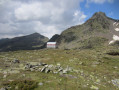
(9) Here, you’ll rejoin the red and white markings ofthe GR® T62, which you should follow all the way to the car park without straying from them. Head down to the left along the marked path heading north-east. The path passes close to the Cabane de la Soucarrane (alt. 2,410 m), then continues its descent northwards. Further down, you’ll pass a small lake below on your left. Continue along the stream until you reach the vast Étang de la Soucarrane (alt. 2,300 m).

(10) Walk along the right-hand side of the lake and pass its spillway. Immediately afterwards, follow a path on your right which descends alongside the stream. Further down, the path veers away from the stream and continues its descent to your left. You must follow this path carefully; it will lead you unambiguously to the bottom of the valley where the Ruisseau de Soulcem flows.

(11) Then turn left, heading north, and follow the wide, grassy, almost flat path which continues alongside the Ruisseau de Soulcem as it meanders lazily to your right. Carry on until you reach a junction marked by a signpost at a fork in the path (alt. 1830 m).

(12) Leave the path leading to the Étang de Roumazet on your left and carry on straight ahead on theGR® T62. Pass the first footbridge on your right without crossing it, go round the Labinas waterfall and reach the next footbridge which crosses the Ruisseau de Soulcem.

(13) Once you have crossed it, turn left onto the wide track and follow it back to the car park where you started (S/E).

Waypoints

  1. S/E : mi 0 - alt. 5,367 ft - Carla iris - Étang de Soulcem
  2. 1 : mi 0.17 - alt. 5,312 ft - Footbridge over the - Vicdessos (rivière) - Affluent de l'Ariège
  3. 2 : mi 1.95 - alt. 7,808 ft - Etang de la Gardelle
  4. 3 : mi 2.16 - alt. 7,884 ft - Fourth - Etang de la Gardelle
  5. 4 : mi 2.45 - alt. 8,084 ft - Pass
  6. 5 : mi 3.19 - alt. 6,932 ft - Junction with GR T62
  7. 6 : mi 3.38 - alt. 7,067 ft - Étang de Roumazet
  8. 7 : mi 4.4 - alt. 8,435 ft - Port du Rouzamet
  9. 8 : mi 4.87 - alt. 9,449 ft - Pic de la Soucarrane (2902m)
  10. 9 : mi 5.57 - alt. 8,215 ft - Port de Bouet (2513m)
  11. 10 : mi 6.2 - alt. 7,520 ft - Etang de la Soucarrane
  12. 11 : mi 7.47 - alt. 6,027 ft - Junction. Soulcem stream
  13. 12 : mi 7.83 - alt. 5,958 ft - Junction - Vicdessos (rivière) - Affluent de l'Ariège
  14. 13 : mi 8.58 - alt. 5,787 ft - Footbridge
  15. S/E : mi 9.4 - alt. 5,367 ft - Carla iris

Notes

  • Fitness level: this walk is indeed intended for experienced walkers who are in good physical condition. The slopes are very steep, both uphill and downhill, and the gradient increases rapidly right from the start of the route (as shown in the elevation profile). It is essential to take the necessary breaks to pace yourself throughout the walk. Do listen to your body and take regular breaks to recover during this demanding hike.
  • Signposting

- Yellow up to the Étangs de la Gardelle.
- Red and white to the Étang de Roumazet.
- Yellow from the Étang de Roumazet to the Pic de la Soucarrane.
- Red and white from Port de Bouet to the car park.

  • Traffic: a little-used route beyond the Roumazet and Soucarrane ponds.
  • When?: In summer, when there is no snow.

Worth a visit

  • There are numerous hiking options in the Soulcem glacial cirque.
  • Mérens horses are a splendid sight in the Vicdessos Valley, particularly in Soulcem, during the season. These magnificent black horses, true symbols of the Ariège, move gracefully across the meadows and add a touch of beauty to the region. Don’t miss the chance to admire them whilst hiking through this valley.
  • The Orris, those stone shelters typical of the Ariège, are living reminders of the flourishing pastoral activity of the last century. You’ll come across many of them along the route described, although they can sometimes be hard to spot as they blend seamlessly into the landscape. Once back at the car park, take the time to visit the Orris du Carla, which are in excellent condition and feature information boards where you can learn more about their history and importance to the region. It’s a unique opportunity to discover this cultural heritage of the Ariège.

Always be cautious and plan ahead when you're outdoors. Visorando and the author of this route cannot be held responsible for any accidents occurring on this route.

The GR® and PR® markings are the intellectual property of the Fédération Française de Randonnée Pédestre.

Reviews and comments

4.7 / 5
Based on 4 reviews

Reliability of the description
5 / 5
Ease of following the route
4.3 / 5
Route interest
4.8 / 5
Pierre_1098
Pierre_1098

Overall rating : 4.7 / 5

Date of your route : Jun 22, 2026
Reliability of the description : ★★★★★ Very good
Ease of following the route : ★★★★★ Very good
Route interest : ★★★★☆ Good
Very busy route : No

Hello,

The walk took 6 hours (excluding a lunch break), without dawdling but without rushing either. A few snowfields were manageable without crampons. The final climb to the peak is quite steep. I ‘came across’ two eagles at the top and a marmot on the way down, but there were few hikers passing by the peak. Most people do the circuit around the lakes.

Machine-translated

osiris130
osiris130 ★

Overall rating : 5 / 5

Date of your route : Aug 23, 2025
Reliability of the description : ★★★★★ Very good
Ease of following the route : ★★★★★ Very good
Route interest : ★★★★★ Very good
Very busy route : No

A very beautiful hike with a magnificent panorama at the summit.

We did it (without the Gardelle lakes) in the opposite direction, which I would tend to find easier, especially for the tricky section between Port de Bouet and the summit.

Not recommended for people who are prone to vertigo or unaccustomed to high mountains. Dogs are also not recommended.

Machine-translated

GCDV31
GCDV31

Overall rating : 4.7 / 5

Date of your route : Jul 28, 2025
Reliability of the description : ★★★★★ Very good
Ease of following the route : ★★★★☆ Good
Route interest : ★★★★★ Very good
Very busy route : No

Hike completed on 26 and 27 July 2025 over two days, starting at 3.30 p.m. and camping at the Roumazet lake, where there is plenty of space to pitch a tent. The description is accurate, with quite a few steep slopes and some sections where you need to use your hands to climb down from the Pic de Soucarrane (de la Rouge). The landscape is very rocky and the views are magnificent. We didn't see many people. After the Port de Bouet, there were a few more people. Thanks for the route!

Machine-translated

Youri_31
Youri_31

Overall rating : 4.3 / 5

Date of your route : Oct 20, 2024
Reliability of the description : ★★★★★ Very good
Ease of following the route : ★★★☆☆ Average
Route interest : ★★★★★ Very good
Very busy route : No

It was a tough run, but what a blast! The ‘VERY DIFFICULT’ warning and the comments on the website (thanks!) are not to be taken lightly. I completed it in 9 hours and 15 minutes, excluding breaks, but I had no choice but to stop and let my heart rate settle on numerous occasions because the climb is so steep. The main challenge of the day was the presence of snow, the first traces of which appeared at around 2,000 metres (yes, it’s marked as being ‘outside the snow season’, but hey, it has its own charm!). It’s particularly tricky in the second section (the climb after the Roumazet lake). This area consists entirely of boulders, and with the snow, you really had to place your feet carefully to avoid slipping between the rocks. Fortunately, a guardian angel had gone before me and I was able to follow in their footsteps. Nevertheless, you lose time and you have to stay focused right up to the pass… which is steep, with small pebbles rolling under your boots (does that ring a bell?). As for the effort involved, as you can imagine, I was completely knackered by the end. The descent seems endless. It’s a joy nonetheless after so much effort, as it ends on a flat stretch running alongside the stream through a beautiful green expanse that reminded me of the ‘pozzines’ at Lake Nino. There were even wild horses. As for the atmosphere and the scenery, it’s magnificent. I was lucky enough to have splendid weather throughout the entire hike. A 360° view, sometimes partially obscured by a light mist clinging to the summits, but fortunately not on my side. Yes, because there are sections on the Pic de la Rouge where you’re clearly on the ridge, sometimes having to use your hands and at other times following a path that’s barely visible but runs below (always on the right-hand side of the ridge!). You only spot the yellow markings once you’re right on top of them, provided you’ve strayed just a metre beyond the point where you were supposed to descend. It’s not straightforward and should definitely not be attempted in foggy conditions.
So I’d say it’s a really enjoyable hike, physically demanding and a bit mentally challenging, not recommended for those who are afraid of heights or who find it difficult to move from rock to rock.
Important: if you’re doing this hike solo, as I did, make sure you have a GPS, a whistle, a survival blanket, enough food and drink, and a VHS radio or better still, share your location via an app or a smartwatch – but leave your mobile phone behind, as there’s no signal from the start to the end of the hike.
Please note: there are virtually no possible detours along this route.
Enjoy!

Machine-translated

Other walks in the area

For more walks, use our search engine .

The GPS track and description are the property of this route's author. Please do not copy them without permission.