


Refine your search for walks in Ancien Craonne
Ancien Craonne walks


 Craonne and the California Plateau
 Visorando Member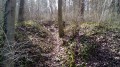
 7.41 mi
 +394 ft
 -400 ft
 3h 45
3h 45
 Moderate
 Departure from Bouconville-Vauclair (Aisne)
Set against the backdrop of one of the sites of the ill-fated Chemin des Dames offensive of April 1917, this route runs mainly through woodland but includes open stretches offering superb views that help one appreciate just how perilous the operation was. The section passing through the site of the former village of Craonne, which was razed to the ground by a barrage of artillery fire, is particularly moving. The ruins of Vauclair Abbey provide a fitting heritage-themed conclusion to the walk.
Le Vieux Craonne and the Chemin de Saint-Rémi
 Association / Club / Walk leader
 4.06 mi
+584 ft
-610 ft
2h 25
Moderate
Departure from Craonne (Aisne)
4.06 mi
+584 ft
-610 ft
2h 25
Moderate
Departure from Craonne (Aisne)
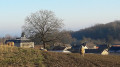
On the Chemin des Dames, where so many tears were shed, cross the village of Vieux Craonne, destroyed in 1917, with its ruins and commemorative trees.
Then cross the woods, walk along the hillsides and fields, and a vineyard on the outskirts of Craonnelle... to soak up the atmosphere of these places steeped in the history of the Great War.
Paths of remembrance from the Great War
 172.50 mi
+9,518 ft
-9,505 ft
28 days
Moderate
Departure from Beaumont-Hamel (Somme)
172.50 mi
+9,518 ft
-9,505 ft
28 days
Moderate
Departure from Beaumont-Hamel (Somme)
This list includes several hikes that pay tribute to soldiers of all nationalities who fought in the First World War. More than a century later, certain remnants still bear witness to the appalling conditions in which they lived. In the list, these hikes are classified according to the front line, from north to south and then from west to east.
Walks near Ancien Craonne
Bouconville-Laon
 14.32 mi
+669 ft
-663 ft
7h 10
14.32 mi
+669 ft
-663 ft
7h 10
 Difficult
Departure from Bouconville-Vauclair (Aisne)
Difficult
Departure from Bouconville-Vauclair (Aisne)
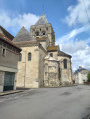
The twenty-fifth stage from the Jura to Hauts-de-France via the Francigena. After passing through the village of Neuville-sur-Ailette, you enter the Domaine du Lac d’Ailette. From every angle, this expanse soothes with the serenity it exudes. Then, the further you go, the more clearly you can make out the silhouette of “the crowned city”, visible for miles around. You arrive in Laon, the departmental capital, with its “airy” cathedral and its numerous openings in the towers, its Templar chapel and its church with the Dutch name Sint Martinus kerk. You will also discover the imposing former episcopal palace as well as the fortifications with their strange leaning tower.
Hermonville-Bouconville
 19.00 mi
+591 ft
-640 ft
9h 15
19.00 mi
+591 ft
-640 ft
9h 15
 Very difficult
Departure from Hermonville (Marne)
Very difficult
Departure from Hermonville (Marne)
Twenty-fourth stage of the Jura to Hauts-de-France via the Francigena. For this stage, you leave Champagne by crossing the Saint-Thierry massif. Once you reach Cormicy, the terrain becomes a little flatter. You pass through Berry-au-Bac. This is where the Berry-au-Bac National Necropolis is located, which contains 3,972 bodies, 2,014 of which are in individual graves and 1,958 in ossuaries. You then continue on to Corbeny, where you can see the Oratory of Saint-Marcoul. Then you follow the "Chemin des Dames", a major site of remembrance of the Great War, to arrive in the village of Bouconville-Vauclair, where you will find the Abbey of Vauclair, the Château de la Bôve and a network of trenches from the 1914-18 war.