


gite de baude

 Tourism professional
 Premium user
Sign up:
Published route(s)
 Montreuil Marsh Trail
 5.57 mi
 +7 ft
+7 ft
 -10 ft
 2h 35
2h 35
 Easy
Easy
 Departure from Montreuil (Vendée) (Vendée)
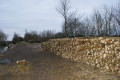
Montreuil, in the 85 department, situated between the plains and the marshes, was once located on the shores of the Gulf of Pictons, hence its name Montreuil-sur-Mer until 1945. The commune consists of a market town and four hamlets. Thefirst part of this trail follows small roads and runs alongside three old ports where there are small jetties that once provided access by boat to the cultivated plots: these are the ports of Baude (the most visible), Écoué and, finally, Fraigneau.
The trail is marked in yellow.
Discovering Montreuil’s heritage
 4.77 mi
+56 ft
-52 ft
2h 15
Easy
Departure from Montreuil (Vendée) (Vendée)
4.77 mi
+56 ft
-52 ft
2h 15
Easy
Departure from Montreuil (Vendée) (Vendée)
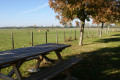
Montreuil has preserved some traces of its past, including its Romanesque church, the courtyard gate, the Écoué porch, the homes of local dignitaries, wells, and so on. Its landscape of plains and marshes invites you to explore. The town was known as Montreuil-sur-mer until 1945, due to its former location on the edge of the Gulf of Pictons. The former gulf is now occupied by the Marais Poitevin, hence this woodcarving of a heron taking flight, the bird emblematic of wetlands. It is accompanied by the names of the hamlets within the commune: Écoué, Baude, Fraigneau.
Circular path in the wet marshes of Doix-lès-Fontaines
 7.03 mi
+16 ft
-16 ft
3h 15
Easy
Departure from Doix (Vendée)
7.03 mi
+16 ft
-16 ft
3h 15
Easy
Departure from Doix (Vendée)
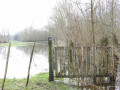
An easy hike that takes you along the levees created four centuries ago by man to protect the drained marshes from river flooding. You will walk through a landscape entirely created by man, with plantations of pollarded or topped ash trees and rows of trees (poplars) lining the canals.We are in the wet marsh: the route may be impassable in late autumn and winter on a small section. (see practical information).
Circular route around the Étier du Marais d’Écoué, starting from Baude
 5.89 mi
+7 ft
-10 ft
2h 45
Easy
Departure from Montreuil (Vendée) (Vendée)
5.89 mi
+7 ft
-10 ft
2h 45
Easy
Departure from Montreuil (Vendée) (Vendée)
Starting from the Baude de Montreuil municipal trail, the walk leads into the commune of Vix. The outward and return journeys follow the embankment between the drained marshes of Vix and the wet marshes of Baude. Part of the route follows the path that crosses the drained marshes, protected by the Écoué dyke or embankment