Country:
 City:
City:


Start from Place de la Jaunière, in front of the tennis courts (on-site parking). A sign at the start tells the story of the village of Coulonges en Tardenois.
(S/E) Then head across the road towards the school.
(1) A sign near the entrance to the former town hall tells the story of the schools in Coulonges. As you cross over, you’ll find a second sign explaining why the school is called “École Quentin Roosevelt”. Just after that, the history of the Coulonges fire brigade is recounted. Finally, the building that houses the local post office is home to the Quentin Roosevelt Museum, which tells the story of this American hero of the First World War, whose plane was shot down on the hills above the village.
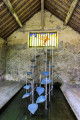
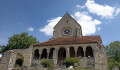
Before climbing the stairs, take a look at the church’s pretty wash house and its beautiful vaulted ceiling. Two information boards on the church tell you, on the one hand, the history of this monument dedicated to Saint Valère and Saint Rufin, and on the other, how the village weathered the turbulent period of the Second World War. Admire the tree planted in 2024 to mark the 80th anniversary of the village’s liberation by the Americans.
(2) As you walk past the church, take a look at the panels telling the story of the soldiers whose names appear on the war memorial, illustrating the work of the association’s volunteers on this subject. Then continue left onto Rue des Cours.
(3) On Rue des Cours, there is also a pretty wash house. A little further on, at the foot of a beautiful mansion, a sign explains how the village suffered the ravages of the Great War, which left several buildings in ruins, including the old town hall. At the crossroads, turn right, then turn left twice at the next forks in the road.
(4) You’ll arrive near the ruins of Rognac Castle (private), where a new sign tells the story of the castle and the origin of its name. At the two junctions, keep left three times.
(5) You’ll reach a viewpoint overlooking the villages of Coulonges, Cohan and, further away, Dravegny – well worth a look. Keep left at the next Fork in the road, then turn left at the end of the road. At the next three junctions, turn left to follow the GR®.
(6) At the end of the path, you’ll reach Cohan; follow the road to the right twice before turning left.
(7) Before taking the footbridge leading to Cohan Church, discover a little further on the pretty Cohan wash house, featuring a beautiful mosaic depicting the fable of Death and the Woodcutter. Then take this footbridge.
(8) Pass by a new sign explaining the history and architecture of Cohan Church. Then continue straight ahead.
(9) At the bus stop, there is a sign telling the story of the village of Cohan, which was merged with the commune of Coulonges-en-Tardenois in 1971 to form the commune of Coulonges-Cohan. Head to the right, then take the path on the left. After the windmill, continue to the right until you reach Les Neuf Arpents.
(10) This spot also offers a lovely view. For those feeling tired, a path leads down to the left into the heart of the village to return to the starting point. For the rest, carry on straight towards the hamlet of Villomé. At the first junction, keep right and head for the hamlet.
(11) Go straight ahead, then turn left twice to reach the D2 road. Cross it, go straight ahead, then turn right to reach Moncel. Then turn left and then right.
(12) As you pass through the hamlet of Montcelt, don’t miss this pretty wash house hidden behind its walls. Continue along the path before turning sharply left.
(13) Walk past the fountain dedicated to Quentin Roosevelt. A sign explains its origins and history. Then continue straight on to the wash house.
(14) The Chamery wash house is a great place to cool off and offers welcome shade or shelter depending on the weather. At the second bend in the road, go straight on along a path.
(15) After skirting the small wood, you’ll reach the spot where Quentin Roosevelt’s plane crashed on 14 July 1918. A large sign tells the story of this hero who left his mark on the history of the village. Then cross the D2 road by heading straight ahead.
(16) Before heading up Rue du Billon, continue straight on to the large wash house. A beautiful building illustrating the fable of the oak and the reed. A signboard presents the village’s wash houses and fountains. Another sign next to the fountain adjoining the wash house tells the story of another village hero, Édouard Ledoux, whose house is just beyond the wash house, and who had the honour of guiding the Americans during the liberation of the village in 1918 following the Second Battle of the Marne. Then head up the street to the right.
(17) At the foot of the cross, the view over the village and the hamlet of Chamery is well worth a detour. A signboard outlines the village’s agricultural activities through the centuries. Then head down to the left towards the church and turn left twice to pass the town hall.
(18) In front of the town hall, a sign introduces the Coulonges brass band, an institution that provided entertainment for village festivals and ceremonies from the late 19th century until the 1970s. Continue along the street and keep to the right.
(19) Place Terrière is where the village festivals take place. On the wooden building housing the festival committee, a sign describes this square and its history, whilst a second sign tells the story of the Fête de la Terre, which took place in the village in 1953 and was the subject of several photographs and a documentary film. On the wall of this building, which was once a butcher’s shop, a signboard outlines the history of Coulonges’ shops and helps identify the various buildings in the village that housed shops throughout the20th century.
Continue to the right towards the inn. The Auberge de la Roue Fleurie is a local institution. You can also discover its history via an information panel. And if the inn is open, why not stop for a drink and a bite to eat to recharge your batteries after this long walk! Then continue along the street to the Place de la Jaunière (S/E).
 Visorando Member
 Easy
Easy 
 Local authority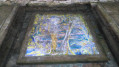
 Association / Club / Walk leader