Keyhaven Marshes

Explore one of the premier birdwatching sites on the south coast, on easy, surfaced paths.

Details

18608671
Creation:
Last update:
Last review:
  • Walking
    Activity: Walking
  • ↔
    Distance: 2.98 mi
  • ◔
    Average duration: 1h 25 
  • ▲
    Difficulty: Easy

  • ⚐
    Back to start: Yes
  • ↗
    Ascent: + 7 ft
  • ↘
    Descent: - 7 ft

  • ▲
    Highest point: 3 ft
  • ▼
    Lowest point: -7 ft

Description of the walk

(S/E) From the car park at the end of Lower Pennington Lane, take the wide gravelled path leading straight ahead, beyond a gate (not the path off towards the shore on the left, which is our return route).

(1) Pass to the left of a large pond and follow the combined cycle and footway for almost a mile, ignoring turnings to left and right. Shortly after a path joins obliquely from the right, you meet a metalled lane beyond a gate.

Follow the lane, keeping straight on at a junction with a private road, until you reach the harbour at Keyhaven.

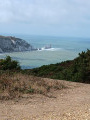
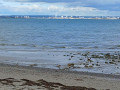
(2) At the near end of the car park, turn left onto a path running along the sea wall with the harbour on your right. Follow the path along the shoreline as it curves left, with views to Hurst Castle and the Needles beyond.

(3) After half a mile you reach a lagoon on your left, where you can either continue past a gate and along the embankment or follow a lower path to the left. The embankment swings left then right and, after another lagoon, crosses a drain (where a path leading off to the left provides a shortcut back to the start).

(4) Swing right, then sharp left past two more lagoons to reach a concrete jetty.

(5) Turn left here to leave the seawall and follow a straight path (which divides into two parallel strands partway along) for 750 yards back to the car park. (S/E)

Waypoints

  1. S/E : mi 0 - alt. 0 ft - End of Lower Pennington Lane
  2. 1 : mi 0.67 - alt. 0 ft - Metalled lane
  3. 2 : mi 0.99 - alt. -3 ft - Harbour
  4. 3 : mi 1.61 - alt. -7 ft - Lagoon
  5. 4 : mi 2.14 - alt. -3 ft - Concrete jetty
  6. 5 : mi 2.52 - alt. 3 ft - Straight path
  7. S/E : mi 2.98 - alt. 0 ft - End of Lower Pennington Lane

Notes

Car park : Allow 11⁄2 hours plus time for wildlife-watching, starting from the car park at the end of Lower Pennington Lane, a 3-mile drive from the Walhampton Arms pub. Level paths throughout, without stiles; follow the red Brent Trail markers.

Pdf Link : http://walksfromthedoor.co.uk/i/walks/Ha...

By car from The Walhampton Arms pub : Turn left out of the pub and follow the B3054 down the hill and across the river into Lymington. Cross the railway at a level crossing, then turn left at a mini-roundabout (signposted ‘Town centre’). Turn right at the bottom of the High Street and drive uphill through the town centre, passing the parish church. On meeting the A337, keep left (one way) and stay in the left-hand lane. Bear left (signposted Christchurch) and continue to a roundabout. Take the first exit (signposted ‘Riverside, Marinas’), then turn immediately right into Lower Pennington Lane. Follow the lane to a small car park at its end, after a winding 11⁄2 miles.

Worth a visit

The Walhampton Arms
Walhampton Hill, Lymington SO41 5RE
Tel 01590 673113
Web www.walhamptonarmslymington.co.uk
Email contact@walhamptonarms.co.uk

  • Hatchet Pond, the largest area of fresh water in the Forest, can be busy at times, but the western and northern shores are quieter.
  • Most of the ponies you will see roaming wild in the Forest are mares, foals and geldings. The number of stallions is tightly controlled and their releases limited to spring and summer.
  • The moist areas of the forest, such as this at the head of Hatchet Pond, are home to some of the more interesting species of flora and fauna. Sundew grows here, and Redshank and Lapwing breed.
  • The oldest open-air lido in Britain, and also one of the largest, the Lymington Sea Water Baths

are Grade II listed.

  • The marshes between Keyhaven and Lymington, many of them formed from the remnants of former saltpans, comprise one of the best birdwatching areas on the south coast. Key species include Avocet, Spoonbill, Marsh Harrier and Dartford Warbler. The whole area is an SSSI.
  • Keyhaven and Pennington Marshes offer good views of Hurst Castle, built by Henry VIII, and the north coast of the Isle of Wight, including the famous Needles rocks and lighthouse.
  • Reed Warblers and the rarer Cetti’s Warbler can be heard along the River Lymington.
  • The Solent foreshore and Isle of Wight.
  • The Burrard Monument, “one of Britain’s finest obelisks”, commemorates Admiral Sir Harry Burrard Neale (1765–1840), who is thought to have been born at Walhampton House.

Other walks in the area

For more walks, use our search engine .

The GPS track and description are the property of this route's author. Please do not copy them without permission.