Saint Dizant du Bois
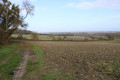
Saint-Dizant-du-Bois is a small French village located in the Charente-Maritime department and the Nouvelle-Aquitaine region (formerly the Poitou-Charentes region). Its inhabitants are called Saint-Dizannais and Saint-Dizannaises.
The commune covers 4.2 km² and has 119 inhabitants according to the latest population census in 2005. With a density of 28.6 inhabitants per km², Saint-Dizant-du-Bois has seen a significant increase of 48.8% in its population since 1999.
Surrounded by the municipalities of Semillac, Nieul-le-Virouil and Allas-Bocage, Saint-Dizant-du-Bois is located 3 km north-east of Mirambeau, the largest town in the area.
Located at an altitude of 77 metres, the village of Saint-Dizant-du-Bois has the following geographical coordinates: Latitude: 45° 23' 53 north Longitude: 0° 34' 0 west.
Places and monuments
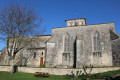
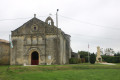
Unusual for the region, the church of Saint-Dizant is one of the few buildings in Saintonge to have a portal surmounted by a tympanum and a Gothic bell tower. Built in the 12th century with a single nave and a straight chevet, its chevet and bell tower date from the 13th and 15th centuries. Bell dated 1527, a silver chalice and a 17th-century painting of the Crucifixion listed as Historic Furniture.
Sources: Wikipedia (excerpts) and Haute-Saintonge Tourist Office (excerpts)
Mirambeau
A small town at the foot of a cuesta that formed a major defensive site over the centuries, this former stronghold, barony and then marquisate under the Ancien Régime, is now one of the centres of the canton of Pons and a hub of commercial and craft activity. The "gateway" to the Bordeaux region, it is served by several major transport routes, including the A10 motorway, which places it less than half an hour from Bordeaux, Saintes and Royan.
A modest but significant economic centre given the essentially rural nature of Haute-Saintonge, Mirambeau is home to shops, supermarkets and various businesses, within a business park that contributes to the town's appeal. Mirambeau also has suitable infrastructure in the areas of education (Didier-Daurat secondary school), culture (library, cultural centre currently under development) and health.
Increasingly focusing on tourism, the town benefits from its location in the heart of the Cognac vineyards, close to those of Bordeaux and not far from the seaside resorts of the Côte de Beauté.
Mirambeau belongs to the Haute-Saintonge community of municipalities, an inter-municipal structure with a population of 57,043 in 2006.
Places and monuments
Mirambeau Castle
The château (private property), whose existence is mentioned as early as the 11th century, is located on a hill overlooking the town by almost forty metres.
The former medieval fortress was one of many strongholds that dotted the "marches" of Saintonge and Guyenne. It belonged to Artaud de Mirambeau (or de Mirambel) in 1083, then, two centuries later, to Guilhem de Cheyning, lieutenant of King-Duke Edward I. Particularly coveted during the Hundred Years' War, it passed alternately into the hands of the French and the Anglo-Aquitanians. In 1345, it was recaptured from the French by Henry de Grosmont, Earl of Derby, during his memorable "chevauchée". In 1415, the town of Mirambeau fell to the Frenchman Jean II Harpedanne, Seneschal of Saintonge.
Hidden by a park, the castle is difficult to see from the town centre. It retains few truly ancient features, apart from a gatehouse and a section of curtain wall, which were rebuilt in the 18th century. The main building dates mainly from the 19th century and combines neo-Louis XIII and neo-Renaissance styles. The chapel, set slightly back, is in the Neo-Gothic style.
The Château de Mirambeau has now been converted into a luxury 5-star hotel. It has 22 rooms, a gourmet restaurant and is surrounded by an eight-hectare park and a winter garden.
Château Chotard
This bourgeois residence was built in 1877 for Alcide Chotard, a businessman and banker who had moved to the town. Surprisingly inspired by Flemish architecture, this "folly" consists of a main building flanked by two pavilions topped with high stepped gables. The interior, decorated in the style of the period, was designed to be comfortable and functional: it still has marble fireplaces, wood panelling and moulded ceilings. The château is surrounded by an English-style park. It is privately owned and not open to visitors.
Notre-Dame-de-l'Assomption Church
Notre-Dame-de-l'Assomption Church is located in the town centre. Built in the 19th century, it replaced an old Récollets chapel that had fallen into disrepair.
A Récollets convent was established in 1715 to counter the influence of Protestant ideas, develop religious instruction and "say mass" (sic). Serving as a parish church for nearly 115 years, it fell into such a state of disrepair that in 1836, the idea of restoring it was abandoned in favour of a complete reconstruction. In 1841, the Récollets chapel was demolished, without a new church having yet been built. It was not until 1856 that the current church was built, but not without difficulty, as the nature of the soil forced its designers to dig foundations more than three metres deep in order to stabilise the building. The vaults were installed in 1857, but the façade and bell tower were not erected until 1875. Finally, in 1889, the choir and transept were decorated with frescoes in shades of blue and gold. In total, more than 100,000 francs were needed to complete the church, a sum paid in part through a subscription, but also thanks to a generous contribution from the Duchâtel family, who owned the castle at the time.
The church is in the Neo-Romanesque style. Shaped like a Latin cross, it consists of a single nave covered with a plaster vault, a slightly protruding transept and a semi-cylindrical apse. The façade, with its beautiful elevation, is composed of three vertical registers and is distinguished by the presence of a bell tower inspired by Romanesque architecture, topped by an elegant stone spire flanked by pinnacles. The interior retains its wood panelling, and in the choir there is a painting depicting the Immaculate Conception, executed in the style of the Spanish painter Bartolomé Murillo, as well as a Crucifixion, gifts from Emperor Napoleon III, who visited this church in 1860.
The south transept houses a painted and gilded wooden statue of the Virgin and Child, listed as a historic monument since 8 March 1994, while near the entrance are 17th-century baptismal fonts in stone with relief decorations, remnants of the former Récollets chapel. Decorated with angel heads, among other things, it has also been listed as a historic monument since 30 September 1911.
Saint-Martin Church
Saint-Martin Church is located in Petit-Niort, a former commune that merged with Mirambeau shortly after the Revolution. This former priory and parish church is one of the few in the department to retain pre-Romanesque features. The north wall of the nave is built of small stones and has the distinctive feature of a small semi-circular window with a claustrum, i.e. an openwork stone window, characteristic of a time when glass was the preserve of the wealthiest parishes.
The rather rustic crypt, with its barrel vault, is also typical of this type of architecture. A charter from this period reveals that the church was then a dependency of Savigny Abbey in Normandy. Partially rebuilt between the 11th and 12th centuries, which saw the flourishing of a particular form of Romanesque art known as "Saintongeais Romanesque", it features a façade with a single portal with five arches and double string courses, surmounted by a series of arcades and modillions.
Significant changes were made to the building in the 15th century, either because it had suffered damage during the Hundred Years' War (the Mirambeau region, on the borders of Guyenne, was the scene of fierce fighting), or because the wear and tear of time had left its mark too heavily. The choir was modified and a side aisle known as the "Virgin's aisle" was built to the south. It features windows with intricate tracery, with bellows and mouchettes, characteristic of the Flamboyant Gothic style. The interior is divided into three naves by large square pillars. Only the choir and the south chapel are vaulted, the rest being covered by a fairly crude exposed roof structure.
The church was listed as a historic monument in 2002. It is only open to the public on rare occasions due to the poor condition of the building, which is in need of restoration.
Lavoir des Sept Fonds
This wash house was restored in 1997.
Source: Wikipedia (excerpts)



 Country:
 City:
City:




 Tourist office
 Easy
Easy 
 Visorando Member