Country:

 City:
City:


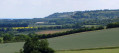
Start and Finish: Cookley Green, War Memorial
(S/E) The walk begins at the Green in the centre of the hamlet. From the War Memorial, follow the minor road on the West side of the green, signposted for Swyncombe Church. At the end of the green this swings left, heading due West.
Follow the road for 300m, ignoring the bridleway to the left, and shortly after the road enters a wood, take the footpath to the left, passing diagonally into the wood.
For the next 9 miles the route follows the Chiltern Way which is well waymarked.
(1) As the path emerges from the trees you get a fine view of the parkland around (A) Swyncombe house, largely hidden by trees in the valley. The footpath runs straight ahead downhill across the grass between the house and the Rectory on your right
As you near the house you pass through a gate and shortly later across a lane before walking alongside the outbuildings. You soon come to the pretty church. Walk through the churchyard and left around the rear/West of the church and out onto a stony lane. Here you turn right and, shortly after, left to join the road from the house. Follow it up to a minor road.
(2) Continue straight on across the road and join the footpath running first downhill and then uphill into some woods. 150m after the path starts to descend again we take a footpath to the left, leaving the Ridgeway path.
(3) The path soon emerges from the trees and there are extensive views encompassing Oxford, Didcot and the hills across the Thames. Follow the ridge westward. After about a kilometre the view on your left opens out and you come to a waymarked fork. Take the left fork through a kissing gate and onto the open grassy ridge (B). You can now walk on top of an earthwork with fine views to both sides.
After a short distance the path passes through a kissing gate into a wood and starts to descend steeply.
(4) As you near a parking area at the bottom of the slope, fork right. At the edge of the wood you meet a byway running by the wood (the Swan's Way). Turn left, to the signed path junction and then right before you reach the road, taking a stony bridleway heading away from the wood in a north-westerly direction.
After 200m, turn left along a grassy byway running to the left of some trees. You soon reach a minor road where you turn right.
Where the minor road starts to swing left, keep straight ahead on a footpath running uphill. You soon reach the brow and after a while the path starts to descend gently towards (C) Ewelme. Ignore the track to the left at the outskirts of the village and keep straight ahead to a minor road.
(5) Church and village are straight ahead, but we turn sharp left along the road, then right after 100m and almost immediately right again alongside the sports ground.
After 100m, turn left on a footpath along the far side of the sports ground past the small pavilion and children's playground. This climbs through some trees and across a field to a road. Here you take a bridleway 50m to the left (sign-posted Chiltern Way), not the footpath just beyond.
After 500m, you come to another minor road. Turn right, then immediately left onto another track (Potter's Lane). You are on a concrete track initially, but where this peters out continue ahead along a narrow bridleway which is soon running between hedges.
(6) Take the left fork by some farm buildings. At the next path junction after 100m, ignore the unmarked track straight ahead and take the path to the right sign-posted Chiltern Way for another 200m with the hedge on your right to a marker post. Here turn left across the field towards a small wood which comes into view as the path starts to descend towards another marker post. Take care here as the walked route is a little different to that shown on the map.
Turn right along a tree-lined track, shortly emerging from the wood to continue uphill with the hedge on your right. Shortly after the crest of the hill the track meets a byway where you turn left.
(7) You will be following this (D) Ancient track for the next 2 miles as it initially descends and later climbs gently uphill. At first the track runs along the hillside below a hedge. After passing through trees it joins a surfaced lane for a short distance. Where the lane turns to the right you fork left and then right to enter trees. It is now a bridleway running through a narrow belt of trees. After another 600m you cross the Ridgeway path and 1300m later, after passing through a wood, the bridleway eventually emerges into a more open area and then runs inside the left edge of a wood. At a Y junction take the left-hand fork (Chiltern Way) and soon see fields on both sides.
(8) Immediately before a house on the left, look out for a footpath to the left, running to the left of a hedge at the edge of a field. Take this path and after 300m turn right through a metal gate in the hedge and cross the B Road. Take great care here - you are crossing on a bend and the hedge can hide the traffic!
Take the minor road ahead of you past 2-3 houses. Continue straight ahead onto a bridleway at the end of the village.
(9) Where the bridleway starts to turn left, turn right on a footpath through the hedge and left along the line of the hedge. The path now runs straight ahead (East) passing through two grassy fields. As you enter a third field you are met with extensive views.
Having passed through a pair of gates in the far left corner of the third field, you emerge into a further field. Bear a little to the left of the ridge line and descend to enter a wood in the far left corner.
(10) At the bottom of the wood, turn left through a gate onto a bridleway, leaving the Chiltern Way (which turns right here).
You now follow this tree lined bridleway as it climbs along the valley bottom. After 750m you re-join the Chiltern Way at a fork in the bridleway - take the left fork.
Your path turns to a stony track by houses. You soon reach the road at the edge of Cookley Green. Here you turn left and return to your starting point.(S/E)
"We hope you have enjoyed your walk. Please remember to rate the walk and add comments. We are interested in how we could improve the instructions or the route and would like to hear about any issues with paths on the walk."
 Tourism professional
 Easy
Easy 
 Association / Club / Walk leader