


Refine your search for walks in Collégiale Royale de Roncevaux
Collégiale Royale de Roncevaux walks


 Roncesvalles loop via Burguete
 Association / Club / Walk leader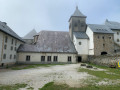
 7.06 mi
 +778 ft
 -784 ft
 3h 55
3h 55
 Moderate
 Departure from Orreaga/Roncesvalles (Navarre)
A beautiful loop around the hospitable center of Roncesvalles, an important stage in the pilgrimage to Santiago de Compostela.Roncesvalles is called Roncesvalles in Castilian, or Orreaga in Basque.
The route passes through the village of Auritz (in Basque) or Burguete (in Castilian).
From Saint-Jean-Pied-de-Port to Roncesvalles
 Visorando Member
 15.48 mi
+4,380 ft
-1,795 ft
10h 55
15.48 mi
+4,380 ft
-1,795 ft
10h 55
 Difficult
Departure from Saint-Jean-Pied-de-Port (Pyrénées-Atlantiques)
Difficult
Departure from Saint-Jean-Pied-de-Port (Pyrénées-Atlantiques)
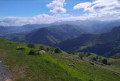
The forty-sixth stage of the Camino de Santiago. A physically demanding stage, featuring the ascent of the Pyrenees, splendid views of the surrounding Basque Country if the weather permits, free-roaming herds, a sense of being high up, and the excitement of crossing into Spain.
After a long, steep descent, you arrive at the Monastery of Roncesvalles. Given the altitude of the finish point and the cool temperatures, I preferred the monastery dormitory to camping. From Saint-Jean-Pied-de-Port, a whole new journey begins. The landscapes are no longer the same, nor are the pilgrims. From here on, there are ten times as many people on the paths. Very few French people and lots of Koreans, Australians, Americans, Filipinos and, of course, Spaniards. From here on, you have to speak Spanish or English or use Google Translate. But you always manage to make yourself understood and get by. That’s the magic of the Camino de Santiago.
Mendixuri and Lindus near Roncesvalles
9.42 mi
+1,627 ft
-1,644 ft
5h 45
Difficult
Departure from Orreaga/Roncesvalles (Navarre)
A very beautiful circular route offering a fairly easy climb up the magnificent Mendixuri. The ascent is mainly along marked tracks or a few clearly visible paths to the foot of the Mendixuri rock. The final 100 metres are along a fairly obvious path leading to the summit. You’ll then be treated to stunning views as you follow a level track to the foot of Lindus. From there, you’ll need to climb a path on the Spanish side to a barbed-wire fence, which you follow to the summit. Alternatively, carry on along the track for a short while until you come across a gap to cross the fence and climb up on the French side via a more visible mountain-bike track that also follows the barbed wire to the summit. The Lindus is of interest mainly for its historical significance. It was the site of a fortification during a Napoleonic battle. Descend on the French side to the road (or on the Spanish side, but you’ll need to cross the barrier at the bottom). Then follow the track to the Ibañeta Pass. From there, follow the Way of St James.
The Way of St James from Villards d’Héria to Santiago de Compostela
 1,231.39 mi
+106,063 ft
-107,326 ft
84 days
1,231.39 mi
+106,063 ft
-107,326 ft
84 days
 Very difficult
Departure from Villards-d'Héria (Jura)
Very difficult
Departure from Villards-d'Héria (Jura)
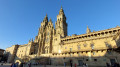
Do you want to connect with nature, admire its beauty at the slow pace of walking, walk to get to know yourself better, get back to basics, and push yourself to new limits? Set off on an adventure along the Camino de Santiago. That’s what I’m offering you with this route. I set off from my village in the Jura (the first six stages aren’t part of the signposted routes of the Camino de Santiago) to reach Santiago de Compostela in Spain, but there’s nothing to stop you setting off from your own home to join the route at one of the stages, or starting from Le Puy-en-Velay or any other town along the way..
Roncesvalles - Esteribar
 20.74 mi
+1,480 ft
-3,114 ft
10h 50
Difficult
Departure from Orreaga/Roncesvalles (Navarre)
20.74 mi
+1,480 ft
-3,114 ft
10h 50
Difficult
Departure from Orreaga/Roncesvalles (Navarre)
The forty-seventh stage of the Camino de Santiago. A long stage but less gruelling than the previous day’s, despite a somewhat arduous descent towards Zubiri. Along this route, you’ll alternate between landscapes of beech and pine forests and charming little villages with typical Navarran architecture. From this stage onwards, the signposting on the Camino de Santiago in Spain consists of yellow arrows—either painted on the ground, on building facades, on rocks or on trees—or specific European signage featuring a stylised yellow scallop shell on a blue background. This logo may also take the form of bronze scallop shells nailed to walls or set into the ground in the major towns along the route, indicating the direction towards Santiago de Compostela.