Country:

 City:
City:


Start: Whiteleaf Hill car park, Peters Lane, near Princes Risborough HP27 0RP. Grid ref: SP 823 036
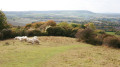
(S/E) From the car park entrance, cross the road, go through the gate opposite and fork right past the information board. Walk through the wood for 180m and take the gate driectly ahead to admire the magnificent panorama from (A) Brush Hill.
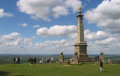
(1) Return to the last kissing gate and continue straight ahead on the Ridgeway which this route will follow until Waypoint 7. After 90m pass through another kissing gate on the right and take the sloping path down to the road. Head up the road for 15m and turn left onto a footpath passing the bottom end of the car park. Continue along the main track for 275m, to pass through a gate onto (B) Whiteleaf Hill. Take time to look at the Neolithic barrow and admire the splendid views.
(2) From the entrance gate, walk forward for around 100m and turn right through a gate. Shortly the path descends steeply down to a gate at the bottom. Go through, turn right and then left past The Plough at Cadsden to a road.
(3) Continue down the road for 70m and take the second path on the right (the Ridgeway). Walk along for 90m, go through a gate and bear left uphill to the next gate.
Go through this gate and the one opposite into (C) Pulpit Hill Nature Reserve. Head through a field keeping a hedge on the right. Look out for orchids and Roman snails. Continue up steps to a kissing gate and up more steps to a path T-junction.
(4) Turn right, after 20m turn left through a metal gate, then right up a slope. Continue on this path as it winds downhill, ignoring paths left and right and climb up a short incline to pass through the gate directly ahead.
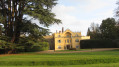
Bear slightly right across the field to go through a gate on the far side. Continue along the Ridgeway with (D) Chequers on the left. After the path bends to the right look out for a gate on the left.
(5) Go through the gate, cross the field and pass two further gates to the Chequers driveway. Cross over, go through the gate opposite into fields and on to another gate at a road.
(6) Carefully cross the road and bear left onto the Ridgeway, signposted Wendover. After 20m fork right following the waymarked path. Shortly after, fork left onto an alternative path until both paths converge. After 25m, at a crossing path, turn right onto the South Bucks Way. The route now leaves the Ridgeway.
(7) Stay on the main track uphill through a wood and continue for nearly half a mile. Branch left at a fork and after 80m reach a five-way path junction.
(8) Do not go into the junction but turn immediately right to follow a well-defined track. After 25m turn left onto a designated path, go over a small bank and pass by the side of a stile to enter the next wood.
Inside, bear left and follow the sometimes indistinct path down through the wood. After 200m, fork left at a path junction continuing downhill to meet a path near the bottom of the hill. Turn left along the path and after 90m turn left uphill.
Follow the undulating path through the wood keeping a field in view on the right for about a third of a mile. At a fork in the path, where a yellow arrow on a tree points straight ahead and a white arrow points to the right, bear right downhill for 90m to emerge into a field.
(9) Go downhill with a hedge on your left. Follow the grassed permissive path around Dirtywood Farm (now Hampden Chase) and turn right down the driveway to a road. Cross the road to the metalled driveway opposite and follow it up to the entrance to Solinger House.
(10) At the house entrance turn left over a stile and follow the main track uphill for 275m. Soon after passing under some transmission cables, ignore a path joining from the right and soon fork right and continue ahead along the path for 370m.
At an unmarked fork bear right downhill to reach a bridleway, turn left and left again. Head straight up the hill ahead to the top.
(11) At a T-junction at the top turn right and follow the edge of the wood for 750m, meet a broad track. Turn left past the WWI trenches to return to the car park.(S/E)
"We hope you have enjoyed your walk. Please remember to rate the walk and add comments. We are interested in how we could improve the instructions or the route and would like to hear about any issues with paths on the walk."
 Association / Club / Walk leader

 Easy
Easy  Visorando Member