Around Saint-Georges-de-Gréhaigne

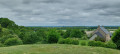
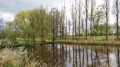
Enjoy a peaceful stroll through the polders and return via the plateau that marks the end of the old coastline. In principle, you can enjoy a breath of fresh air. The route presents only one small difficulty, namely the coast between Chanel and Haut Chanel, with a difference in altitude of 15 m to 75 m. The reward in season is cherries!

Details

89687775
Creation:
Last update:
Last review:
  • Walking
    Activity: Walking
  • ↔
    Distance: 8.71 km
  • ◔
    Average duration: 2h 45 
  • ▲
    Difficulty: Easy

  • ⚐
    Back to start: Yes
  • ↗
    Ascent: + 78 m
  • ↘
    Descent: - 77 m

  • ▲
    Highest point: 77 m
  • ▼
    Lowest point: 6 m

Photos

Description of the walk

Departure from the small car park in front of the church of Saint-Georges-de-Gréhaigne.

(S/E) Turn your back on the church and go down the street on the left. Take the first street on the left and follow the path. On the road, turn right.

(1) When you reach the road (D797), turn left and, a little further on, take the path on the right. Continue straight ahead until you reach the first crossroads.

(2) Take the road on the right, leaving the buildings on your left, and stay on the left after these buildings until you reach the second crossroads.

(3) Head south-east to the right to reach Le Pas au Bœuf and head towards the Moidrey farm on the left. Continue straight ahead until you reach the next road on the left.

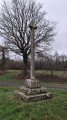
(4) Turn left (a wayside cross on the left marks the crossroads). Continue straight ahead until you reach the stream on the left. Turn in this direction and follow the stream which leads to the Greenway. Pass through the sluice gate and follow the sign for bicycles indicating Saint-Malo on the left. Follow the tree-lined path, ignoring two crossroads.

(5) At the third junction, take the path on the left, which leaves the trees. Turn right and continue to the junction with the D797.

(6) Cross it and continue straight ahead. You will arrive at a place called Chanel.

(7) At the crossroads, leave Roz-sur-Couesnon on your right and head towards the centre of the hamlet on your left. At the first crossroads, take the road on your right and climb the slightly steep hill.

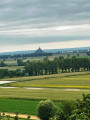
(8) At the top of the hill, take the road on the left, which turns into a path. There is a beautiful view of the white marsh. Continue along the path, which gradually turns into a trail. Follow it as it veers east and runs alongside the N172 (you can't see it, but you can hear it). The trail passes through the undergrowth and descends to a farm track.

(9) Take it on the left to reach a road and turn right. Continue straight on the road to reach Rue du Puits in Saint-Georges-de-Gréhaigne.

(10) At the third crossroads, look for the bell tower and take the second road on the right to reach the car park (S/E).

Waypoints

  1. S/E : km 0 - alt. 26 m - Car park in front of the church of St-Georges-de-Gréhaigne
  2. 1 : km 0.23 - alt. 8 m - Crossroads on the D797
  3. 2 : km 1.04 - alt. 7 m - Crossroads
  4. 3 : km 1.59 - alt. 8 m - Intersection
  5. 4 : km 2.42 - alt. 8 m - Wayside cross
  6. 5 : km 4.31 - alt. 9 m - Crossing on the greenway
  7. 6 : km 4.99 - alt. 8 m - D797
  8. 7 : km 5.49 - alt. 10 m - Place known as Chanel
  9. 8 : km 6.06 - alt. 66 m - Hauts de Chanel
  10. 9 : km 7.48 - alt. 15 m - Farm track
  11. 10 : km 8.58 - alt. 21 m - Crossroads
  12. S/E : km 8.71 - alt. 26 m - Car park in front of the church of St-Georges-de-Gréhaigne

Worth a visit

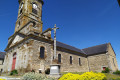
St George's Church
Former priory church founded inthe 11th century by the Benedictines of Saint-Georges Abbey in Rennes. The building was rebuilt in two successive phases at the end of the13th century and the beginning ofthe 14th century, starting with the nave and ending with the choir. The roof structure dates fromthe 15th century. Some openings were made or reworked in the16th century for the chevet and in the17th century for the nave and choir. 16th-century stained glass windows.
For more details, click here.

The presbytery
The former presbytery, now a private residence, is notable for its remarkable architecture.

To the south, the Villée Calvary
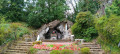
Calvary belonging to the Villée estate, marked by the passage of Charles Bonaventure Marie TOULLIER at the time of the revolution

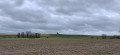
The Polders
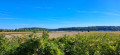
In 1858, the course of the Couesnon was diverted by the construction of the canal that exists today. The draining of its estuary allowed for the gradual reclamation of 2,450 hectares of polders. Unlike the Dutch method, these polders were not reclaimed by building a dam to isolate the land and pumping out the residual salt water. Here, the land was reclaimed from the salt marshes (or salt meadows). When a section of salt marsh was mature, i.e. sufficiently colonised and consolidated by vegetation, it was embanked to protect it from the tide. More than 50 polders, highly fertile due to their richness in carbonates and trace elements, were thus successively reclaimed from the sea between 1856 and 1933. This land is used for agriculture.

Other walks in the area

For more walks, use our search engine .

The GPS track and description are the property of this route's author. Please do not copy them without permission.