Country:
 City:
City:


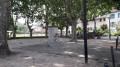
Park in the car park opposite the school.
(S/E) Walk past the Poleymieux inn and, at the corner of this building, take the sloping path on the right. Walk up through the village along the road called Chemin du Cruy until you pass the small Saint-Christophe church on your right.
Further on, leave the main road and turn slightly right towards the cemetery.
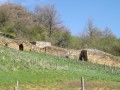
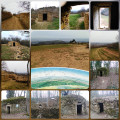
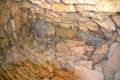
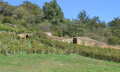
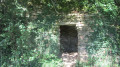
The tarmac road ends at the cemetery. Continue to the right under the cemetery towards the drystone shelters (old shepherds' shelters built of dry stone).
This wide stone path allows you to discover several of these typical constructions.
(1) After 1 km of gentle descent, you will reach a crossroads. Turn left and start climbing towards the top of the village on Chemin du Chêne, also known as Chemin des Drystone Shelters. This stony path is narrow but well shaded.
Cross the road and continue straight ahead. When you reach the second road, turn right towards the Risler Tower.
(2) Go past the tower, turn left onto the footpath that continues uphill, reach the three-way junction and follow the road on the right called Chemin du Pavillon.
(3) After climbing for 500 metres, you will reach the houses in the hamlet of Le Pavillon. Please note that there are no benches along this route and the steep climb is quite tiring. Continue along the same path, climbing left into the woods.
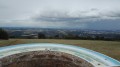
(4) You will come out onto the Mont Py plateau, which is occupied by the army. The fenced-off area houses military installations responsible for air traffic control. Take the tarmac road leading to the base and descend to a crossroads.
(5) Take the road on the left that descends towards Poleymieux.
(6) 300 m below the crossroads, leave the road and follow the small path that branches off to the right, downhill, and continue until you rejoin the road leading down to the village. Take it to the left and, at the entrance to the village, turn right. Walk downhill for 500 m, then turn left towards the Ampère Museum, staying on the pavements at the side of the road.
(7) Pass in front of the Ampère Museum, dedicated to the discoverer of electricity, and reach the school car park (S/E).


 Visorando Member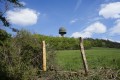
 Easy
Easy