


Refine your search for walks in Le Vaudoué
Le Vaudoué walks


 From Le Vaudoué to Malesherbes
 Visorando Member
 9.40 mi
 +417 ft
 -292 ft
 4h 40
4h 40
 Moderate
 Departure from Le Vaudoué (Seine-et-Marne)
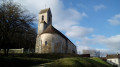
After crossing the Rambouillet Forest in the previous stage, this section is a restful one. It takes you to Malesherbes station. This is one of the easiest stages of the GR®1. The start is at Le Vaudoué. It is the only stage of the GR®1 that does not start at a station. The hike alternates between sections in the woods and more rural sections. The first interesting sight on the route is the church in Le Vaudoué. The path then leads to the former Templar Commandery before crossing woods and fields towards the Essonne and Saint-Martin Church in Malesherbes.
Heritage and forest in Le Vaudoué
 10.40 mi
+417 ft
-410 ft
5h 10
Moderate
Departure from Le Vaudoué (Seine-et-Marne)
10.40 mi
+417 ft
-410 ft
5h 10
Moderate
Departure from Le Vaudoué (Seine-et-Marne)
A pleasant walk, mainly through forest for the first two-thirds, taking in two superb Romanesque churches and the remains of the chapel of a former Templar commandery.
The Route des 25 Bosses
 9.42 mi
+1,949 ft
-1,942 ft
6h 00
9.42 mi
+1,949 ft
-1,942 ft
6h 00
 Difficult
Departure from Le Vaudoué (Seine-et-Marne)
Difficult
Departure from Le Vaudoué (Seine-et-Marne)
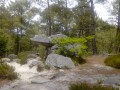
As the name suggests, the route involves climbing 25 hillocks that form a loop around the Forêt des Trois Pignons. A challenging hike, amidst the rocks, which makes for excellent training ahead of summer mountain hikes.
N.B. The elevation gain is underestimated: expect a cumulative elevation gain of between 800 and 900 metres. It would be hard to find a greater climb in the Île-de-France region, unless you were to climb up and down the Eiffel Tower on foot three times in a row... Allow between 6 and 7 hours of walking.
Rock art in the Forest of Fontainebleau
 2.51 mi
+148 ft
-148 ft
1h 15
2.51 mi
+148 ft
-148 ft
1h 15
 Easy
Departure from Le Vaudoué (Seine-et-Marne)
Easy
Departure from Le Vaudoué (Seine-et-Marne)
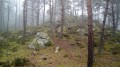
A short, easy themed route showcasing rock art discovered in the Forest of Fontainebleau and in the south of the Île-de-France region. Seven chronological information panels, with representations of the landscape at the time, photos and casts of engravings, take us on a journey from the Palaeolithic era to the present day.
The route was designed, developed and is maintained by the ONF.
Around the Trois Pignons
 4.80 mi
+203 ft
-184 ft
2h 25
Moderate
Departure from Noisy-sur-École (Seine-et-Marne)
4.80 mi
+203 ft
-184 ft
2h 25
Moderate
Departure from Noisy-sur-École (Seine-et-Marne)
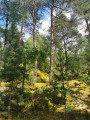
A pretty hike in the Massif des Trois Pignons, on the edge of Fontainebleau forest.
Wooded trail around Boissy-aux-Cailles
9.66 mi
+417 ft
-407 ft
4h 50
Moderate
Departure from Boissy-aux-Cailles (Seine-et-Marne)
We pass on either side of a valley where the beautiful village of Boissy-aux-Cailles is located, following paths wide enough to walk two abreast while chatting, or trails in single file. The variety of tree species is surprising: oak, chestnut, birch, beech, pine, etc. And also on the edges of agricultural fields where lavender grows alongside beetroot and cereals.The best times to enjoy it to the full are late spring (May-June), when the flora dazzles us with its colours and scents, and autumn (mid-September-October), when the leaves of the trees are adorned with their yellow, ochre and red colours and accompanied by the rich and subtle smells of mushrooms and sometimes game.
A long walk in the Massif des Trois Pignons
 13.02 mi
+1,106 ft
-1,093 ft
6h 55
Difficult
Departure from Noisy-sur-École (Seine-et-Marne)
13.02 mi
+1,106 ft
-1,093 ft
6h 55
Difficult
Departure from Noisy-sur-École (Seine-et-Marne)
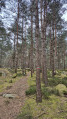
A long route through the Trois Pignons massif, offering a different perspective on this massif and the 25 bumps route: what is on the other side of this route, what is in the middle (Les Sables du Cul de Chien and Les Rochers du Général, for example) or nearby (the beautiful Vallée Chaud)? The route is winding, with lots of ups and downs (you do climb some of those famous hills) and requires a good sense of direction.
Panoramic views of the Trois Pignons
 9.10 mi
+1,375 ft
-1,371 ft
5h 25
Difficult
Departure from Noisy-sur-École (Seine-et-Marne)
9.10 mi
+1,375 ft
-1,371 ft
5h 25
Difficult
Departure from Noisy-sur-École (Seine-et-Marne)
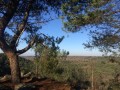
A beautiful hike with some elevation gain in the wildest and most beautiful areas of the Trois Pignons massif. It combines the beautiful Dénécourt trail no. 16 (the Sentier des Belvédères via the Laris Qui Parle) with a more athletic section of the Circuit des 25 Bosses. Actual elevation gain (altimeter measurement): 580m.
In the Massif des Trois Pignons
 7.41 mi
+876 ft
-879 ft
4h 10
Moderate
Departure from Noisy-sur-École (Seine-et-Marne)
7.41 mi
+876 ft
-879 ft
4h 10
Moderate
Departure from Noisy-sur-École (Seine-et-Marne)
The Massif des Trois Pignons is situated on the edge of Fontainebleau forest. The walk takes you past the Rocher des Guetteurs, the Sables du Cul du Chien, the Diplodocus, and the Rocher de la Tortue.
Sentier des Belvédères
 5.19 mi
+285 ft
-259 ft
2h 40
Moderate
Departure from Noisy-sur-École (Seine-et-Marne)
5.19 mi
+285 ft
-259 ft
2h 40
Moderate
Departure from Noisy-sur-École (Seine-et-Marne)
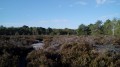
A course over hills, with beautiful views of the Massif des Trois Pignons. Passages on platières in the middle of the moor with an unobstructed view, interspersed with passages in undergrowth and amid boulders. A varied, rather sporty hike.
N.B. The drop is probably underestimated: expect something more in the order of 300 metres.
Bois-Rond, a morning circuit
 6.34 mi
+348 ft
-318 ft
3h 15
Moderate
Departure from Noisy-sur-École (Seine-et-Marne)
6.34 mi
+348 ft
-318 ft
3h 15
Moderate
Departure from Noisy-sur-École (Seine-et-Marne)
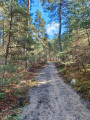
A simple and varied circuit in the forest of Fontainebleau, with views above the trees and rocks, and different landscapes every kilometre.
Please note that weather conditions and the use of certain paths by mountain bikes can make this hike muddy and very slippery in places. Therefore, please be very careful.
Arbonne Valley, Gros Buisson, Milly Rocks, Queen’s Rocks
9.87 mi
+374 ft
-371 ft
4h 50
Moderate
Departure from Noisy-sur-École (Seine-et-Marne)
This is an area rarely visited by walkers, which is quite unspoilt and borders on designated nature conservation areas. The route consists of sandy paths that dry out very quickly. Take care on the rocks on the plateaus, as they can be slippery in wet weather. Furthermore, the paths on the plateaus are not signposted and it is easy to get lost. A GPS or the Visorando app is therefore recommended.
La Butte de Sucremont
 1.95 mi
+144 ft
-144 ft
1h 00
Easy
Departure from Noisy-sur-École (Seine-et-Marne)
1.95 mi
+144 ft
-144 ft
1h 00
Easy
Departure from Noisy-sur-École (Seine-et-Marne)
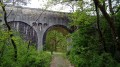
A short walk through the varied landscapes of the Forêt des Trois Pignons, which can be the destination for a family outing, especially with young children.
Du plateau du Coquibus à celui des Belvédères par le Rocher aux Voleurs
6.66 mi
+495 ft
-499 ft
3h 30
Moderate
Departure from Noisy-sur-École (Seine-et-Marne)
Une randonnée qui passe du plateau du Coquibus à celui des Belvédères afin de varier les paysages et les points de vue. Cette randonnée se fait à la demi-journée.
Le détour par le "Chapeau de Napoléon" est supprimé: passage trop délicat pour un intérêt limité.
La Roche qui Tourne and Les Platières de Coquibus
 8.61 mi
+407 ft
-407 ft
4h 20
Moderate
Departure from Noisy-sur-École (Seine-et-Marne)
8.61 mi
+407 ft
-407 ft
4h 20
Moderate
Departure from Noisy-sur-École (Seine-et-Marne)
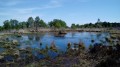
A hike in a little-visited part of the Forêt des Trois Pignons, through several biological reserves. This varied route alternates between forest paths, trails that wind between rocks and open stretches on flat rock outcrops.
This hike requires a good sense of direction.
In the heart of the Coquibus massif
 11.88 mi
+778 ft
-787 ft
6h 10
Difficult
Departure from Arbonne-la-Forêt (Seine-et-Marne)
11.88 mi
+778 ft
-787 ft
6h 10
Difficult
Departure from Arbonne-la-Forêt (Seine-et-Marne)
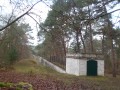
This long hike takes you on a fairly comprehensive tour of the magnificent Coquibus massif: heather-covered plateaus and water holes, deciduous woods, rocks, viewpoints, the Vanne aqueduct (sandstone steps), etc.
The Virgin Tower and other viewpoints from Arbonne-la-Forêt
7.30 mi
+653 ft
-643 ft
3h 55
Moderate
Departure from Arbonne-la-Forêt (Seine-et-Marne)
A half-day walk offering access to the Tour de La Vierge, the Vanne and Loing aqueducts, and the viewpoints at Hurlevent and the Hautes Plaines. All this whilst following part ofthe GR®®11through beautiful rocky terrain and peaceful connecting paths where you can relax.
Please note: the route covers 13 km with 300 metres of elevation gain. It’s quite a challenging hike for such a relatively short distance.
From Milly-la-Forêt to Ballancourt-sur-Essonne through the Gâtinais region.
 20.81 mi
+758 ft
-781 ft
10h 15
20.81 mi
+758 ft
-781 ft
10h 15
 Very difficult
Departure from Milly-la-Forêt (Essonne)
Very difficult
Departure from Milly-la-Forêt (Essonne)
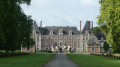
This is the twenty-eighth stage of the Grand Tour of Île-de-France via the GR®11, connecting Milly-la-Forêt to the Ballancourt-sur-Essonne train station after crossing the French Gâtinais region. It is designed to follow on fromthe previous stage coming from Fontainebleau, after a night's stay there.This stage begins in the École valley, which boasts a rich heritage: Milly-la-Forêt, Moigny-sur-École, Courances and its château, and Dannemois, dear to Claude François. It continues through the fields of the Gâtinais, then the ridges and sandstone plateaus of the Grands Avaux forest, ending at Ballancourt-sur-Essonne in the valley of the same name.The stage is very beautiful but very long, and undoubtedly the most physically demanding of all those on the GR®11, especially in its second part. However, it is possible to split it in two by staying overnight and/or shorten it in several places by simplifying it.
Loop of Milly-la-Forêt via the Vanne and Loing aqueducts
 9.64 mi
+433 ft
-420 ft
4h 50
Moderate
Departure from Milly-la-Forêt (Essonne)
9.64 mi
+433 ft
-420 ft
4h 50
Moderate
Departure from Milly-la-Forêt (Essonne)
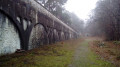
A hike that alternates between villages rich in heritage (old market hall, churches, wash houses, castle) and a trail through the Forêt des Trois Pignons dotted with sandstone rocks.
More walks in Le Vaudoué
Select a point of interest below: