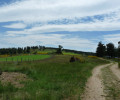
The Col du Marchand from Pailharès

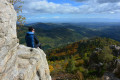
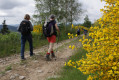
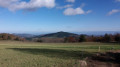
A very pleasant hike with remarkable views. The climb to the Col du Marchand is along beautiful trails winding through dense forests and open pastures, offering a peaceful and varied atmosphere. Once at the pass, the route continues towards the Sardier massif, where a superb panorama opens up over the surrounding area. The descent passes through the hamlets of Les Bauds and Nectardechois, adding an authentic touch to the route. This is a pleasant, well-balanced hike that is particularly remarkable for its many viewpoints.

Details

70658675
Creation:
Last update:
Last review:
  • Walking
    Activity: Walking
  • ↔
    Distance: 10.55 km
  • ◔
    Average duration: 4h 15 
  • ▲
    Difficulty: Moderate

  • ⚐
    Back to start: Yes
  • ↗
    Ascent: + 430 m
  • ↘
    Descent: - 433 m

  • ▲
    Highest point: 1,101 m
  • ▼
    Lowest point: 659 m

Photos

Description of the walk

Departure from the Pailharès rest area.

(S/E) Take the small road on the right uphill towards Col du Marchand. Follow the cement road, then the paved road. Pass a house and enter a chestnut forest via a dirt road. You will reach a stream.

(1) Go uphill and leave the woods via a pretty paved path, which leads to a road. Follow it to the left until you reach the next house (Fontay).

(2) Take the grassy path next to the house, rejoin the road and follow it to the right until you reach Clos de Pierre Martin.

(3) Continue straight ahead and follow the main path. Pass a valley and you will come to a fork further on. Go left and descend to the right.

(4) Cross the Ruisseau de Vinson and turn left to climb up a winding path through the woods. You will come out onto a track and climb up to the departmental road. Turn left to the Col du Marchand.

(5) Stay on the D532 towards Le Serre des Vernes, then quickly take the path on the left. Climb a steep dirt track, then turn right onto a wider path. Turn left immediately to climb into the forest and then reach a carriage road.

(6) Go up to the left. The track then descends to Les Vernes. Continue straight ahead until you reach the place.

(7) Walk alongside the house in Les Vernes, pass a wide valley until you reach a fork. Go down to the left and shortly afterwards leave the main path, turning left onto a grassy path.

(8) Cross the Ruisseau de Baud and continue along a paved path to the hamlet of Baud.

(9) Cross the hamlet and descend onto a small shaded road. Further down, take a path below the road. Return to the road at the end of the path and pass the Nectardechois premises. Continue to a fork in the road.

(10) Continue straight ahead to the village. (S/E)

Waypoints

  1. S/E : km 0 - alt. 698 m - Pailharès - Village rest area
  2. 1 : km 1 - alt. 668 m - Stream
  3. 2 : km 1.49 - alt. 740 m - Fontay
  4. 3 : km 2.1 - alt. 735 m - Le Clos de Pierre Martin
  5. 4 : km 3.8 - alt. 791 m - Vinson stream
  6. 5 : km 4.54 - alt. 906 m - Col du Marchand (904m)
  7. 6 : km 5.41 - alt. 1,030 m - Road accessible to vehicles
  8. 7 : km 7.27 - alt. 1,021 m - Les Vernes
  9. 8 : km 7.87 - alt. 943 m - Baud stream
  10. 9 : km 8.41 - alt. 873 m - Le Baud
  11. 10 : km 10.25 - alt. 714 m - Road
  12. S/E : km 10.55 - alt. 694 m - Pailharès - Village rest area

Notes

Access
From Saint Félicien, take the D273 to Pailharès.

Parking
Village rest area

Worth a visit

The "chevelu" of the Daronne
The commune of Pailharès is located in the upper part of the Daronne river basin. The watershed is the entire area that collects water and channels it into a river and its tributaries. It is a kind of funnel into which all the watercourses (streams) of the river flow. It therefore has boundaries: the watersheds that naturally follow the ridges of the mountains. Rainfall on one side of the mountain collects in streams and eventually flows into the Daronne, which feeds into the Doux, a tributary of the Rhône. Rainwater can also seep into the rock and form underground aquifers, emerging as numerous springs that feed the streams. On site, it is very easy to spot the numerous streams thanks to the presence of specific vegetation (which particularly likes water): hydrophilic plants. To name but a few: reeds, birch trees, easily identifiable by their white bark, alder trees and willows.

View
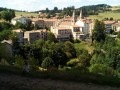
Panoramic view of the Daronne valley and the Alps.

A brief contemporary history of the Ardèche forest
At the beginning of the20th century, the Ardèche had no more than 100,000 hectares of forest. The many farmers were always looking for arable land, even on steep slopes (terraces). Following a massive rural exodus and two world wars, cultivated land was gradually abandoned. It was transformed into forests or invaded by scrub and heathland. Today, forest covers around 250,000 hectares, or nearly a third of the Ardèche, and continues to gain ground. It belongs to a multitude of small private owners. Often farmers, they own 90% of the forest area, but this high degree of fragmentation complicates the management of forest areas.

After the fire
In 2003, a major fire ravaged a large part of the forest covering the Serre des Vernes. Ten years later, nature has reclaimed its rights and vegetation has returned to the mountain. Here is a brief explanation of the different stages of revegetation: - The pioneer stage: mosses and lichens begin to develop.- The herbaceous stage: after a few years, the herbaceous carpet closes in. Grasses develop. - The shrub stage: after the appearance of brambles and broom, shrubs develop (blackthorn, hawthorn, rose hips, etc.), forming a very dense "shrubland". - The forest stage: it would take at least 30 years (or much longer) for real trees to develop spontaneously (hazel, oak, Scots pine, etc.). In the case of the Serre des Vernes, it will be many more years before the Ardèche forest returns.

Viewpoint

Reviews and comments

5 / 5
Based on 1 review

Reliability of the description
5 / 5
Ease of following the route
5 / 5
Route interest
5 / 5
User 20092740

Overall rating : 5 / 5

Date of your route : Jul 21, 2025
Reliability of the description : ★★★★★ Very good
Ease of following the route : ★★★★★ Very good
Route interest : ★★★★★ Very good
Very busy route : Yes

very beautiful hike, very well detailed, a real pleasure

Machine-translated

Other walks in the area

For more walks, use our search engine .

The GPS track and description are the property of this route's author. Please do not copy them without permission.