


Refine your search for walks in Japan
Japan walks


 Takamizuyama in the Okutama area on the outskirts of Tokyo
 Visorando Member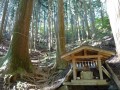
 6.06 mi
 +2,234 ft
 -2,283 ft
 4h 45
4h 45
 Difficult
 Departure from Japan
A 4-hour walk (not including stops) with the big advantage of starting at one station and arriving at another: no need to take a bus to access the hike (rare in the region).
Beautiful sugi (Cryptomeria japonica) forests with stunning views, temples and shrines.
The route is well marked and signposted at all intersections.
Important: the Japanese names are given in one of the photos; you will need them to follow the signs.
Mount Jimba and Mount Takao
 10.80 mi
+3,022 ft
-3,481 ft
7h 35
10.80 mi
+3,022 ft
-3,481 ft
7h 35
 Moderate
Departure from Japan
Moderate
Departure from Japan
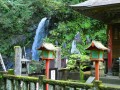
A classic route in the Takao region. The route starts at the foot of Mount Jimba, then follows the ridge line with a few peaks and passes, offering beautiful views of the Tokyo metropolis to the east and Mount Fuji to the south-west. The route ends at Mount Takao, after which there is a wide choice of routes back down to the station, including a funicular.
Mounts Oogiyama and Momokurayama between Torisawa and Saruhashi stations
 8.49 mi
+3,727 ft
-3,720 ft
7h 10
Difficult
Departure from Japan
8.49 mi
+3,727 ft
-3,720 ft
7h 10
Difficult
Departure from Japan
Just 1 hour 15 minutes from Shinjuku Station in central Tokyo, this is a beautiful, wild and challenging walk, during which – provided it isn’t hidden by the clouds – you can admire Mount Fuji.
Mount Benishiyama and Elephant’s Back
 2.83 mi
+1,946 ft
-1,946 ft
3h 00
Moderate
Departure from Japan
2.83 mi
+1,946 ft
-1,946 ft
3h 00
Moderate
Departure from Japan
Mount Benishiyama (便石山) is a must-do hike in the Kumano region of Mie Prefecture. The route starts from Camp Inn Miyama and heads towards Elephant’s Back (象の背), a rock whose shape resembles an elephant’s back, offering a striking panorama of the Choshi River and the Sea of Kumano Nada.
The climb is steep, punctuated by numerous wooden steps through a forest of cypress and Japanese cedar trees with a mystical atmosphere. Accessible provided you proceed at your own pace. Allow around 2 hours one way.
For an unforgettable sunrise from the rock, plan to set off around 2am; headlamps are essential. The area is home to bears and snakes: a bear bell is mandatory; inform a trusted person before setting off.
Mount Ōyama
 6.04 mi
+3,035 ft
-3,586 ft
5h 25
Difficult
Departure from Japan
6.04 mi
+3,035 ft
-3,586 ft
5h 25
Difficult
Departure from Japan
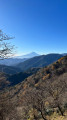
This hike up Mount Ōyama is a popular day trip from Tokyo that combines mountain scenery, cultural sites, and panoramic views. Starting from the Oyama Cable Bus Stop, hikers can either take a cable car or climb through forested paths and stone steps to reach Ōyama Afuri Shrine. From there, the trail continues to the summit, with opportunities to enjoy views of Mount Fuji and the surrounding region. After reaching the peak, hikers can either retrace their steps or descend the opposite side of the mountain toward Hinata, where views of Tokyo accompany much of the descent. Overall, it's a moderately challenging hike that blends nature, history, spectacular viewpoints, and many many steps!
Mount Nokogiri
7.36 mi
+2,211 ft
-2,205 ft
5h 20
Moderate
Departure from Japan
A circular route around Mount Nokogiri, offering a varied hike between forest trails, steep stairs and rocky passages.
The route is characterised by a significant elevation gain, with sustained climbs leading to several spectacular viewpoints over Tokyo Bay.
A demanding but very rewarding outing, ideal for athletic hiking or trail running, in an impressive natural environment combining cliffs, forests and local heritage.
Mount Takao
5.06 mi
+1,663 ft
-1,640 ft
3h 45
Moderate
Departure from Japan
Circular route around Mount Takao, following well-marked forest trails with a gradual but steady incline.
The route alternates between steady climbs, more technical passages and rolling sections, offering a balanced and varied outing.
Ideal for active hiking, trail discovery or hill training in a natural environment easily accessible from Tokyo.
Best enjoyed in dry weather; some sections may be slippery after rain.
From Zao Onsen to Okama Crater
 8.46 mi
+2,326 ft
-2,185 ft
5h 55
Difficult
Departure from Japan
8.46 mi
+2,326 ft
-2,185 ft
5h 55
Difficult
Departure from Japan
A very beautiful hike from Zao Onsen to Okama Crater. The hike starts at the arrival point of the 'sky cable' cable car. It is a round trip with a few variations between the outward and return journeys.For the first variation, you can choose between a forest path or following the road.The second variation is just after the arrival point of the large cable car, where there is also a jizo statue. You can climb to a small intermediate summit (which offers a beautiful view!) or go along the side (also with a beautiful view of the surrounding mountains). At this point, there was snow, and the side section was quite slippery.Finally, the third variation is a choice between a direct path to the summit or a gentler route. The direct path is not very well marked (at least with the snow), but you can follow the tracks of other people.
Mount Fuji
9.14 mi
+4,849 ft
-4,843 ft
8h 25
 Very difficult
Departure from Japan
Very difficult
Departure from Japan
Ascent of Mount Fuji from the bus stop and Step 5 at 2,400 metres. Demanding hike. The climb is steep between the path of small cinders and lava flow, and the last 300 metres are difficult due to the altitude. You can refuel at each step (including small oxygen tanks!) and have your walking stick engraved as you climb. The descent is difficult only because of another path made of small cinders that get into your shoes. Great satisfaction when you return to the starting point.
Daïbosatsu-tôgé from Senzan
 4.81 mi
+3,793 ft
-515 ft
5h 30
Difficult
Departure from Japan
4.81 mi
+3,793 ft
-515 ft
5h 30
Difficult
Departure from Japan
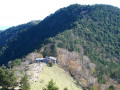
The walk offers superb views (weather permitting) as you follow the ridge for about 2km, taking an hour if you take your time. This is quite rare at this altitude, where you are usually in the forest. Views, of course, of Mount Fuji, which is completely clear right down to its base, but also to the east over the whole of Tokyo, and to the west over the Yamanashi conurbation and the entire Southern Alps range.
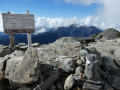
Kitadake, Japan’s second-highest peak
 6.62 mi
+5,518 ft
-5,518 ft
7h 50
Difficult
Departure from Japan
6.62 mi
+5,518 ft
-5,518 ft
7h 50
Difficult
Departure from Japan
Superb views of Mount Fuji and the whole of the Southern Alps. My best hike in Japan. Whilst not technically difficult, it does require a bit of effort, but every step counts. Unlike other hikes that are a bit of a rollercoaster, here you just keep climbing. You therefore pass through all the vegetation zones fairly quickly: classic mixed forests, birch forests, then shrubby areas before reaching the final zone of rocks and low-growing plants.