Country:
 City:
City:


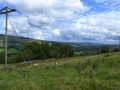
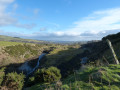
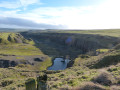
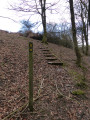
Start: Park in Frosterley. Grid reference NZ 025 369.
If the parking is full then there is parking available at the Railway Station. Grid reference NZ 023 369.
(S/E) From the car park walk to the large chunk of Frosterley Marble on a plinth. (Look for the white shapes which are the remains of the now extinct Dibunophyllum Bipartitum coral) Continue walking in the same direction Westwards along the pavement until you can cross over to the South side of the road. At the junction turn left (road sign White Kirkley and Hill End) and walk downhill to enter Frosterley Station on the left.
(1) On the station platform is another chunk of Frosterley Marble, this one has been carved and polished in places so you can see the effect this has (particularly if it is wet). Now return to the road, turn left and follow the pavement to cross the bridge over the railway line and then the River Wear. Continue, following the pavement, to a converted chapel on the left. (On the opposite side of the road is a wooden finger post pointing left)
(2) Immediately after the chapel turn left onto a track which runs between the chapel and a house; this leads into a private parking area for a farm and passes beside some farm buildings. Continue along the track passing through metal gates as you go (please close them after you), below and on your left is a caravan park. The path leads upwards towards East Bridge Farm but before you reach the farm buildings look out for a narrower path on the left marked with a yellow arrow (Mineral Valleys Walk) on a wooden fence post. Turn left and follow the narrower path, this leads towards the River Wear and then curves away as it enters some light woods. You will arrive at a narrow valley on the right formed between old spoil heaps. Do not go up this valley or the spoil hill on the left, instead keep to the path on the left which contours the base of the spoil heap and which leads to a gate.
(3)Do not go left through the gate but keep on to walk through woods and then through a gate and into a field with a fence on your left. On the opposite side of the fence is the disused Broadwood Quarry. The southern end is often flooded (more so in winter) and is a good place to spot water fowl. Continue through the field to the bottom left corner and a small gate. Go through and down a path to a a flat area (once an old railway track). Walk in an Easterley direction and pass an old stone shack on the right. (People use this as a shrine to their loved ones) Continue to a narrow footbridge on the right. Cross the footbridge and follow the path through the woods to another ruined building. This is the remains of The Lead Mine buildings at Harehope Gill. There is an interpretation board giving you information about the old workings. Then follow the track around to the right and into a field with the remains of the water wheel structure up on the left.
(4) From the remains of the water wheel, re-join the path, walk in a Westerley direction across the field and into woodland beside Bollihope Burn. This is part of the Weardale Way, but this section through the wood, although short, is uneven and the path can be slippery. On leaving the woods cross a stile into another field and walk over to a gate beside the remains of a stone bridge on the right. Opposite, on the far side of the burn, you will start to see a large stone structure with arches. These were the Bishopley Lime kilns and as you walk through the field there is another interpretation board giving you information about them. Then follow the path in the same direction to pass beside farm buildings and a junction with a road. Turn right and walk down and around a bend to a large metal gate on the left with a stile.
(5) Cross the stile beside the metal gates and follow the good track in a South Westerly direction. Bollihope Burn will be on your right to start with. Cross a footbridge and pass beneath the power lines. Keep following the good track, with Bollihope Burn now on your left. The track passes between a gap cut through the limestone with a third interpretation board about Forgotten Quarry. (These pillars of limestone and the quartz encrusted quarry a little further along on the right and no longer forgotten; you will see the metal bolt hangers and chains installed by climbers, and you might even see people climbing here). Continue along the good track to a second footbridge.
(6) At the footbridge the path splits.
The right hand split (Weardale Way) leads through woods and to a caravan site and then up (9). This is a way of shortening this walk.
To do the walk in full; cross the bridge and follow the good track in a Westerley direction into the Bollihope Quarries. (look out for some boulders on the left which show both the Great Limestone and Alston granite (the latter which has been eroded and transported by glaciation). At a point where the track ends at a spoil heap and where it fords the burn to a caravan park there is a line of stepping stones just beyond the ford.
(7) Cross the stepping stones and follow the track again the the parking area for Bollihope Common and the road. (This is a popular area for picnicking and in summer an ice cream van is often here)
(8) At the road turn right and head uphill walking on the good grass verge on the right hand side. Follow this all the way to the building and side road (on the right) which leads down to Fineburn Caravan Park.
(9) From the junction, cross the road to an obvious track which curves up and to the left of the road. Follow this track past the entrance to a house and straight over the junction with another track. Pass to left of a fenced off water treatment works and up to pass between small spoil heaps before the track joins the Weardale Way beside a prominent stone wall. Turn left and follow the path with the stone wall on your right. Ignore the first wooden gate on the right and continue to where the wall turns 90 degrees to the right. Follow the path around to the right and to a wooden gate and smaller kissing gate.
(10) Go through the gate and into the field. You are now aiming diagonally right and down across the field to the bottom right hand corner. A good way of doing this is to start by aiming for the right hand end of a collapsing stone wall and short way down the field. Then in you look up you will see the transmitter tower on the other side of the valley. Walk using this as a guide and as you near the power lines you should see the wooden ladder stile in the corner of the field. Aim for the wooden stile.
(11) Cross the wooden stile and turn left to walk a short way down the field. Look out for a gate and yellow way markers on the left. This gives you access to the top of the spoil heaps above a disused quarry. Take Care the ground ahead drops steeply! Although this is the Weardale Way the path is not obvious and the ground is covered with thistles in summer and it is easy to follow a feint track along the top of the spoil heap. Do not do this. Instead look out for a path through the thistles keeping the boundary wall on your immediate right. This is not obvious at first but it will drop steeply down (take care) to a gate on the left leading onto a track. (Yellow marker arrow)
(12) Go through the gate and straight ahead to a ruined building where there is a T junction with another track.
(13) At the T junction turn right, you can walk to a gate and then turn left, or more sensibly walk rightwards for a few metres and cross diagonally over a grassy area to join a track beside a fence. At a gate cross over the fence on the right into the field on the other side and continue to walk in a North Easterly direction to an obvious gate. Go through this into the next field; the path crosses diagonally and half way across the field is a depression with a stream at the bottom (Cow Burn). The path is obvious as it rises out of the dip, so aim for this. (Note the tracklog shown deviates from the path as we had to make a detour to avoid some cows and their young calves) On the other side of the stream follow the path upwards and when you can see the stone wall aim for the inside corner where there is a stile. Go into the next field and cross this diagonally to an obvious gate in the far corner.
(14) Go through the gate and follow the track to cross the road leading to Parson Byers, take the continuation of the track with Parson Byers on the left and a dilapidated out-building on the right, the track turns to the right but turn off it to cross into a field via a stile made from tree stumps going over a gate. Now walk diagonally , following a line of poles, to a gap in the wall/stile
(15) Go over the stile and down to the road. Turn left and walk along the road in an East North Easterly direction, where the road turns right go straight ahead into the caravan park. Walk along the road through the caravan park to the end and cross a stile onto a path in the woods. Follow the path which turns to the right and enters a field, always keep the boundary fence on your left and the path turns left and leads to the railway line. You can either climb steps to cross the line or use the tunnel to go under it. On the far side follow the path across the field to an obvious metal gate. Go through into the next field and cross this to join the path beside the River Wear. Follow the pavement in the same direction to a footbridge.
(16) Cross the footbridge and turn right. Follow the pavement with the River Wear on your right, the pavement curves up leftwards beside some houses to join the market place in Stanhope. Cross over to the Bonny Moorhen and turn left, follow the pavement past the church (look out for the fossilised tree stump) and walk to the Durham Dales Visitor Centre. (This is a great place for mid way refreshments, other cafe's are available in Stanhope along the high street)
(17) From the visitor centre walk back past the fossilised tree stump to the lane running up between the church and the Bonny Moorhen. Turn left and walk up, at the top turn left again and walk along the road to the Methodist chapel. Immediately after the chapel is a car park and immediately after this a narrow green path (between walls) on the right (wooden post)
(18)Turn right and follow the path which leads up and into Ashes Quarry. This path leads to a cross roads of paths with a gate (straight on allows you to walk up to the bridges which span the quarry workings and it is a good place to get an impression of the scale of the workings) if you do this return to the cross roads of paths and go through the gate on the right (looking uphill) and follow the path through the quarry to a gate leading onto a road. Turn left and walk up hill to a stile on the right leading through a gap in the stone wall (public footpath signpost).
(19) Follow the path across the field and go through the gate on the left into a second field. Walk across this with a wall on your right to then pass into a third field. Go through this to a gate in the corner and cross into a narrower field. Cross this diagonally leftward aiming for a gate in the corner. Go through the gate and step down then follow the path diagonally to a gate leading into the wood. Go through and follow the path down to a footbridge.
(20) Cross the footbridge, turn right and walk uphill, at a bifurcation in the path take the left hand path which leads uphill via a few steps. The path leads into an area which has high bracken in the summer; this can conceal the path. Fortunately the area of bracken is short lived and when you emerge you are aiming for a stile over a fence. Cross over the stile and then walk to a gap in a between a stone wall and a fence. Cross through (the area in front can be boggy after rain) and aim diagonally uphill, at first for the end of a stone wall leading from a ruin and then up to the obvious ruins of the house. Climb over the gate/stile on the path beyond.
(21) The path marked on the OS map does not exist, so turn left and follow the path uphill via the obvious rake. At the top turn right onto a feint sheep track and walk back in the direction of the ruined house along Shittlehope Edge. The sheep track merges with a more prominent quad bike track, follow this in a Southerly direction. (The OS map shows a path leading SE, in reality this is a greener area on the moorland with only a feint track on it. (Navigation wise it is better to do the following) Stay on the quad bike track and where it splits take the left hand track to walk above Roundhill Quarry. At the point where you can see the quarry wall and flooded area you will find a track on the left leading uphill.
(22) Turn left and follow the track uphill, this leads to a tied off gate with missing stile.
(23) Climb over the fence (the far side has a maker arrow) You are now walking diagonally uphill towards Pit House. The ground below the house has two shallow gullies with streams at the bottom of each. As you walk uphill, following mainly sheep tracks, aim for a metal gate in the wall to the left of Pit House. You will cross the leftmost gully near the top where it is least wet to get to the gate. (At the time of writing the latch was missing and the gate was tied shut so you may have to climb over it until it is mended) Then walk up to a path and turn right to follow the path to the ruins of Pit House. On the far side and below the ruin is an obvious gap/stile in the stone wall.
(24) Go over the stile and turn immediately right. Walk downhill keeping the wall about 10m to your right and veering away from it to aim for another gap/stile in the wall at the bottom of the field.
(25) Cross over this and head diagonally downhill aiming for a telegraph pole beside the road to Frosterley Cottage. At the road walk over to pass beside the old railway waggon. Walk gently down to aim for a gap on the right in the line of trees. Once there the path is more obvious; it curves leftwards through the woods and down to pass between two old stone posts. Emerge in a field and cross the corner of this to a gate. Go through into the next field and walk with across to a rusted, blue metal gate. (If it is very wet underfoot this section can be bypassed by turning left at the road and following it through a gate and down to (26))
(26) Go through the gate and onto the road. Turn right and walk down hill passing between the old Frosterley Quarries and to a junction with the main road.
(27) Cross over, turn left and walk back into Frosterley and the car park. (S/E)


 Visorando Member

 Easy
Easy