


Refine your search for walks in Col d'Urdanzia (872m)
Col d'Urdanzia (872m) walks


 Circular Munhoa-Olharrandoï from Guermiette
 Visorando Member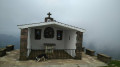
 9.21 mi
 +3,530 ft
 -3,514 ft
 7h 20
7h 20
 Difficult
 Departure from Saint-Étienne-de-Baïgorry (Pyrénées-Atlantiques)
This is a beautiful hike that takes you around the Guermiette valley via Munhoa and the Urdanzia and Leizartzeko passes. Once you reach the Ahartzako Pass, those with the most stamina can climb up to the Olharandoï Chapel or continue along the hillside following theGR®10.
Walks near Col d'Urdanzia (872m)
From Saint Jean-Pied-de-Port to Bidarray
13.73 mi
+1,749 ft
-2,041 ft
7h 50
Difficult
Departure from Saint-Jean-Pied-de-Port (Pyrénées-Atlantiques)
A beautiful stage in the Pyrenean foothills along country lanes.
From Saint-Jean-Pied-de-Port to Roncesvalles
 15.48 mi
+4,380 ft
-1,795 ft
10h 55
Difficult
Departure from Saint-Jean-Pied-de-Port (Pyrénées-Atlantiques)
15.48 mi
+4,380 ft
-1,795 ft
10h 55
Difficult
Departure from Saint-Jean-Pied-de-Port (Pyrénées-Atlantiques)
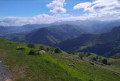
The forty-sixth stage of the Camino de Santiago. A physically demanding stage, featuring the ascent of the Pyrenees, splendid views of the surrounding Basque Country if the weather permits, free-roaming herds, a sense of being high up, and the excitement of crossing into Spain.
After a long, steep descent, you arrive at the Monastery of Roncesvalles. Given the altitude of the finish point and the cool temperatures, I preferred the monastery dormitory to camping. From Saint-Jean-Pied-de-Port, a whole new journey begins. The landscapes are no longer the same, nor are the pilgrims. From here on, there are ten times as many people on the paths. Very few French people and lots of Koreans, Australians, Americans, Filipinos and, of course, Spaniards. From here on, you have to speak Spanish or English or use Google Translate. But you always manage to make yourself understood and get by. That’s the magic of the Camino de Santiago.
Crossing the Baïgura massif from Ossés to the leisure centre
5.92 mi
+2,533 ft
-1,959 ft
4h 55
 Moderate
Departure from Ossès (Pyrénées-Atlantiques)
Moderate
Departure from Ossès (Pyrénées-Atlantiques)
There are many ways to tackle the Baïgura. The simplest is to set off from the Mendionde leisure centre via the discovery trail. The route is signposted and there is an information board at the start.
I suggest doing the full traverse of the massif from south to north, starting from Ossès. For this, you’ll need two cars.
In my opinion, the paths are much more varied and rarely used, with many running along ridges offering magnificent views of the mountains and villages of the Basque Country.
Roncesvalles - Esteribar
 20.74 mi
+1,480 ft
-3,114 ft
10h 50
Difficult
Departure from Orreaga/Roncesvalles (Navarre)
20.74 mi
+1,480 ft
-3,114 ft
10h 50
Difficult
Departure from Orreaga/Roncesvalles (Navarre)
The forty-seventh stage of the Camino de Santiago. A long stage but less gruelling than the previous day’s, despite a somewhat arduous descent towards Zubiri. Along this route, you’ll alternate between landscapes of beech and pine forests and charming little villages with typical Navarran architecture. From this stage onwards, the signposting on the Camino de Santiago in Spain consists of yellow arrows—either painted on the ground, on building facades, on rocks or on trees—or specific European signage featuring a stylised yellow scallop shell on a blue background. This logo may also take the form of bronze scallop shells nailed to walls or set into the ground in the major towns along the route, indicating the direction towards Santiago de Compostela.
The Col d'Urzategiak
 Tourist office4.63 mi
+1,066 ft
-889 ft
3h 05
Moderate
Departure from Béhorléguy (Pyrénées-Atlantiques)
Tourist office4.63 mi
+1,066 ft
-889 ft
3h 05
Moderate
Departure from Béhorléguy (Pyrénées-Atlantiques)
Every autumn, the Col d'Urtzategiak is gripped by ‘blue fever’. It affects a large part of the local population. The hunters are all perched on the ridges, in the trees, watching for the migration of the wood pigeon.