The Best Walks in the Surrey Hills for Scenic Walking Adventures
The Surrey Hills is one of the most accessible and rewarding landscapes for walking in South East England. Designated as a National Landscape, it combines chalk ridgelines, dense ancient woodland, open heathland commons, and picturesque villages. Just a short journey from London, it provides an easy escape into nature with an impressive variety of walking routes suited to all abilities.
From short countryside strolls to more demanding hill walks with sweeping viewpoints, the area is one of the most popular starting points and one of the most enjoyable places for outdoor exploration in Surrey. Its combination of natural beauty, historic landmarks, and well-maintained footpaths makes it a year-round destination for walkers.
Easy Walks in the Surrey Hills (2–4 km routes)
For those looking for gentle countryside routes, the Surrey Hills offers several short walks that are ideal for families, beginners, or relaxed weekend outings.
Box Hill’s Natural Play Trail is one of the most well-known introductions to the area. This approximately 3 km route follows a mix of woodland paths and surfaced trails, making it relatively easy to navigate in most conditions. It is a steep, busy, iconic viewpoint overlooking the Mole Valley, where the landscape opens up dramatically despite the short distance. The route also includes interactive natural play areas, making it particularly appealing for families.
Abinger Hammer is a quiet rural loop with a historic village feel. This 1-hour circular route, just over 4 km, passes through open fields, quiet woodland, and traditional countryside scenery. The walk captures a strong sense of rural heritage, with highlights including historic water features and small village details that reflect the area’s long agricultural history. The village itself is known for its charming tea rooms and local farm shop, making it a pleasant place to start or finish a walk.
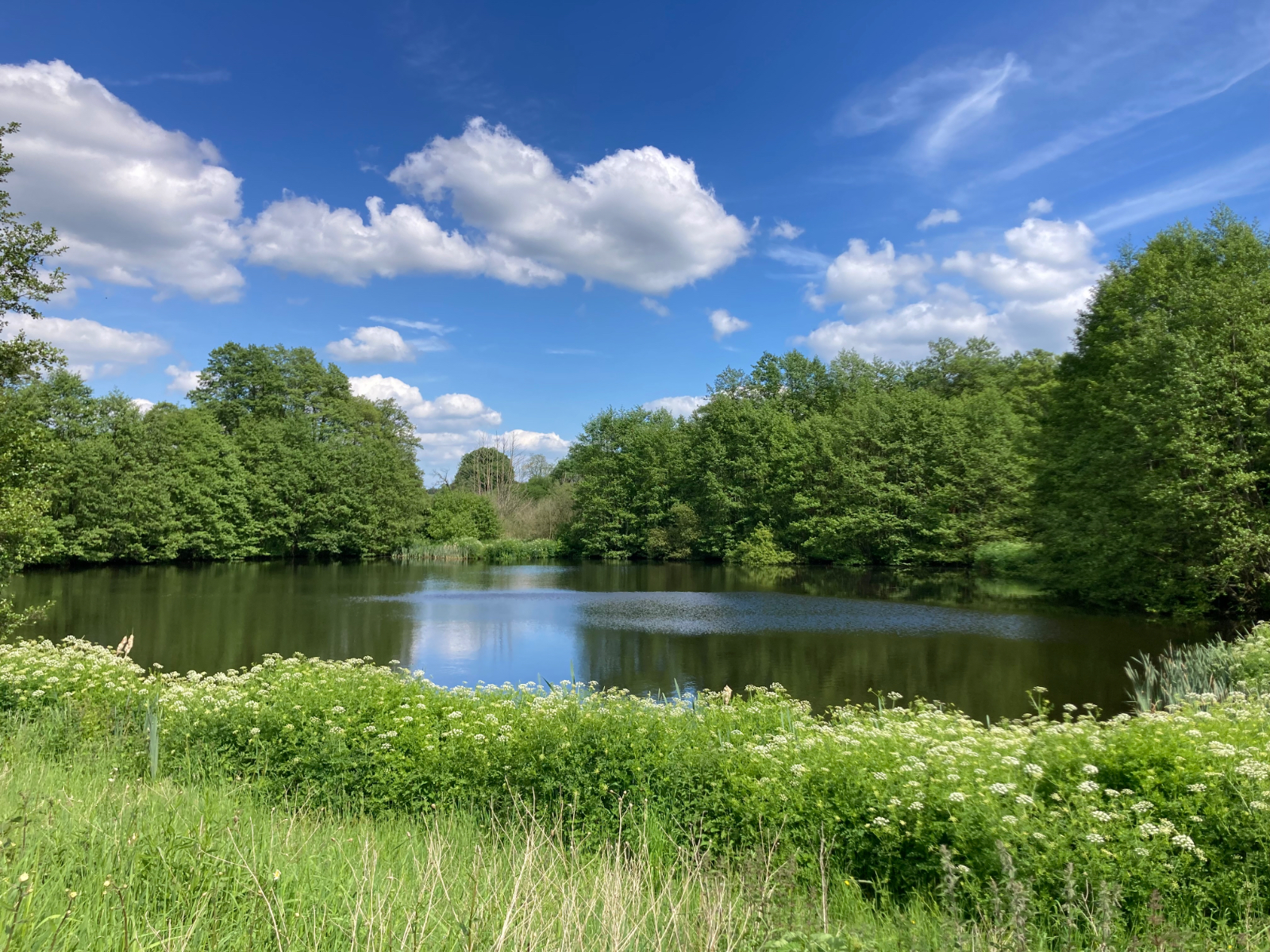
For those seeking an easy, car-free option, the Godalming Riverside walks provide an excellent alternative. Starting directly from the train station, this short 2 km walk follows the River Wey through peaceful paths and historic surroundings.
Moderate Walks in the Surrey Hills (10–15 km routes)
Longer routes across the Surrey Hills reveal more varied terrain, combining woodland climbs, open ridges, and expansive viewpoints that reward steady exploration.
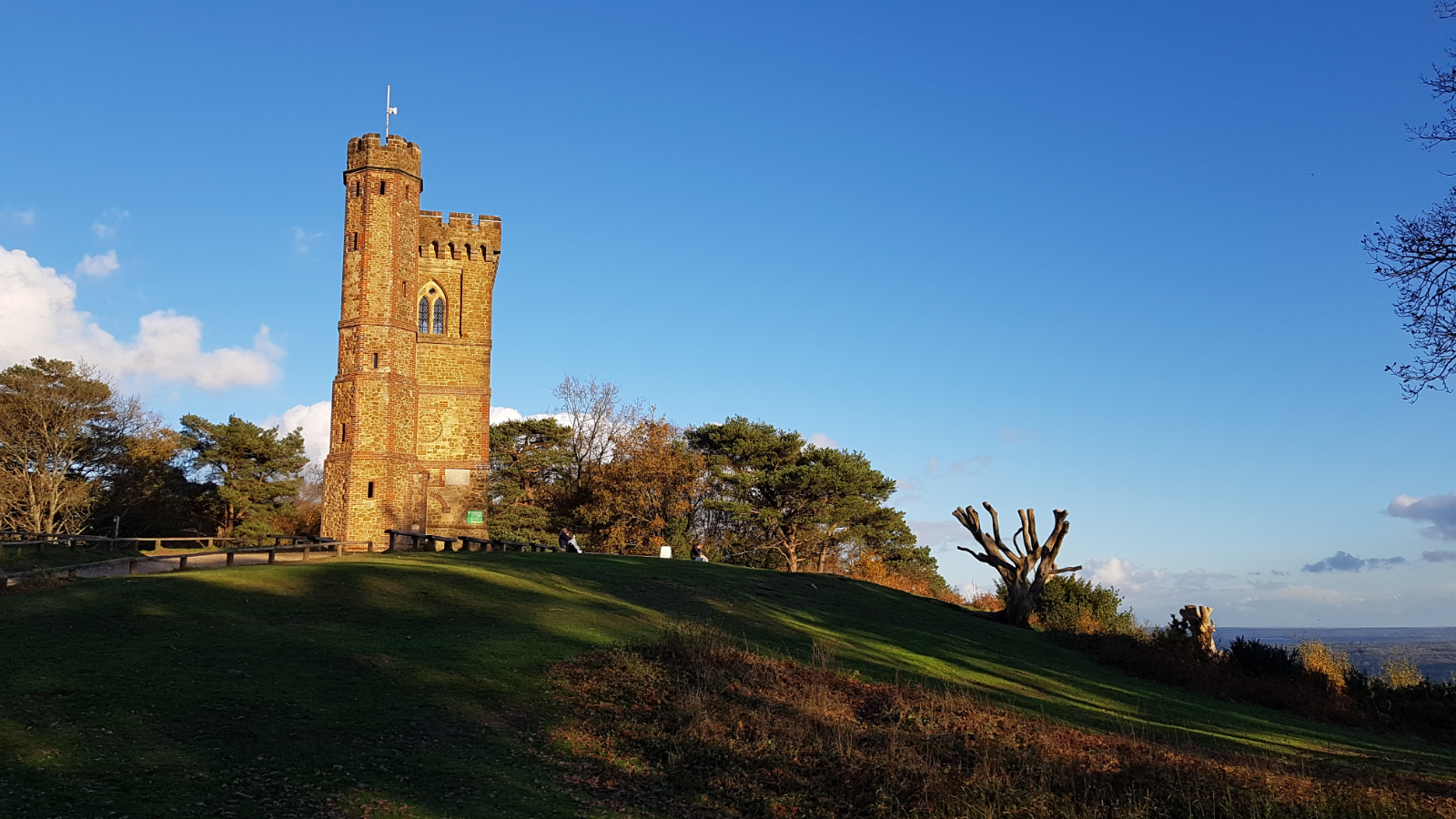
One of the most scenic longer walks runs from Friday Street through the Tillingbourne Waterfall and Leith Hill Tower. Covering roughly 10–11 km in 3-4 hours, this route passes through dense woodland, streams, and rolling countryside before reaching Leith Hill, the highest point in South East England. At the summit stands Leith Hill Tower, a historic 18th-century landmark that enhances the already extensive panoramic views. From here, walkers can see across the Weald and, on clear days, as far as the South Downs.
Another rewarding long-distance route is the Horsey Diamond Jubilee trail, stretching around 14–15 km through open countryside and woodland edges. While not especially steep, its length makes it more suitable for experienced walkers. The path is quiet and immersive, offering long stretches of uninterrupted scenery and frequent encounters with local wildlife.
The circular route linking Gibbet Hill and the Devil’s Punch Bowl near Haslemere is another standout walk. This 13–14 km trail combines two of the most dramatic natural features in the Surrey Hills. Gibbet Hill offers one of the highest viewpoints in the county, while the Devil’s Punch Bowl provides a vast, amphitheatre-like landscape carved into the heathland. Together, they create a varied and visually striking walking experience with constant changes in elevation and scenery. Overall, this walk is for those wanting a 4-5 hour, dramatic, atmospheric, slightly wild route.
The High Points of the Surrey Hills
One of the defining features of the Surrey Hills is its elevated viewpoints, which provide some of the best long-distance scenery in southern England.
Box Hill is one of the most visited landmarks in the region, known for its steep escarpment, chalk grassland, and panoramic views across the Mole Valley. The hill is named for the large number of box trees that grow there. The stepping stones across the River Mole also add a distinctive feature that blends natural landscape with a sense of adventure. From the summit, views stretch across the North Downs, making it a popular destination throughout the year.
Leith Hill is a longer endurance climb with a true summit feel, rising to 294 m, and is the highest natural point in South East England. The site takes its name from the Old English word hlith, which means hillside with a hollow at its foot. Its elevation allows for far-reaching views that can extend to the London skyline, the South Downs, and even the English Channel on exceptionally clear days. The surrounding landscape is a mix of ancient woodland and heath, giving the area a quieter and more remote atmosphere compared to other viewpoints. The presence of Leith Hill Tower at the summit adds historical interest to the natural setting.
Together, these high points define much of what makes walking in the Surrey Hills so rewarding, combining physical challenge with exceptional scenery and history.
The Seasons of Walking in the Surrey Hills
The landscape of the Surrey Hills changes significantly throughout the year, offering very different experiences depending on the season.
Spring is one of the most visually striking times to explore the area. Woodlands come alive with fresh greenery and carpets of bluebells, while open fields begin to brighten with early wildflowers. The entire landscape feels renewed and vibrant.
Summer brings longer days and warmer weather, making it ideal for extended walks. Woodland routes provide shade during the hotter parts of the day, while hilltop viewpoints offer clear, far-reaching visibility across the countryside.
Autumn is widely considered the most atmospheric season. The hills and woodlands shift into deep shades of orange, gold, and red, creating highly scenic walking conditions. Cooler temperatures also make longer routes more comfortable.
Winter offers a quieter, more stripped-back version of the landscape. While conditions can be colder and muddier, the lack of foliage opens up wide views across valleys and ridgelines, giving a sense of openness not seen in other seasons.
Final Thoughts on Exploring the Surrey Hills
The Surrey Hills remain one of the most rewarding walking regions in southern England, offering a rare combination of accessibility, variety, and natural beauty. Its proximity to London makes it especially attractive for day trips, while its network of trails ensures there is always something new to explore.
If you want to get away from the big city, Surrey Hills is your opportunity to do so. It’s a humbling parkland and offers many scenic viewpoints that you would see in places like Peak District, Lakes District, Northumberland, and Loch Lomond and The Trossachs National Park, to name a few.
Whether choosing a short riverside stroll, a woodland climb, or a full-day ridge walk, the area consistently delivers strong scenic value and a sense of escape from urban life. The diversity of terrain, combined with its historic landmarks and elevated viewpoints, makes it a standout destination for anyone interested in countryside walking.
 Abinger Hammer
  Visorando Member


 Easy
Easy 

 Moderate